How to Choose an Automotive Borescope?

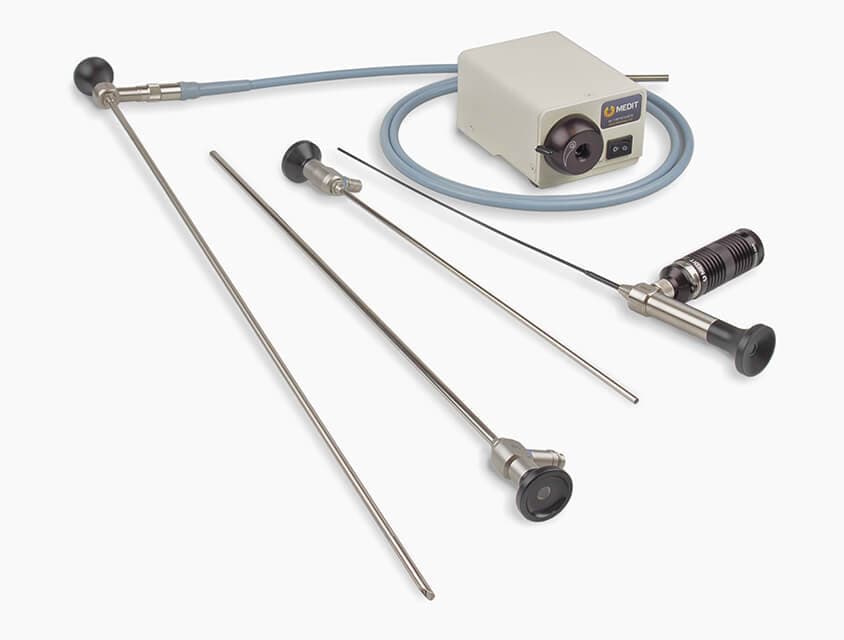
There are many applications where borescopes are important and even critical. Borescopes are used every day by automotive technicians to inspect automotive components. The most important components such as fuel nozzles, hydraulic components and systems, welded tubing, engine cylinders, valve seats are all inspected using borescopes or fiberscopes. The borescope allows the mechanic to inspect defects inside the part that otherwise would remain undetected, causing a potential failure down the road. Without borescopes technicians often use invasive testing or disassembling which is both costly and time consuming. Borescopes and video borescopes (videoscopes) pay for themselves by detecting problems and improving overall quality.

What is the difference between borescopes and video borescopes (videoscopes)? The main difference is that videoscopes transmit video or still images from the camera in the probe tip to the recording and imaging hub, while optical borescopes use optical relay system or glass fiber bundle, and they are mainly used for eye only inspection.

Auto and diesel engine mechanics often use borescopes and videoscopes to inspect cylinders, piston crowns, valves and valve seats. This often prevents costly and time consuming tear down.

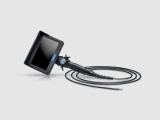
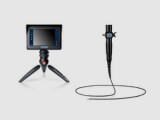
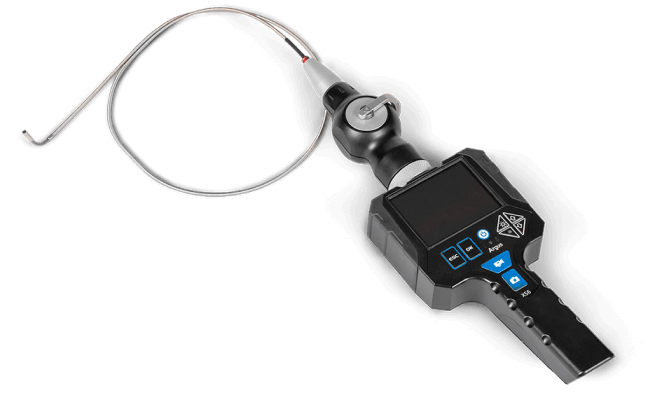
Flexible videoscopes with articulation are very useful. Technicians observe hard-to-reach places and record images or video for further analysis and to in order to the best method of repair in difficult cases.

Articulated videoscopes are often used to inspect gear boxes and cylinder blocks. The insertion probe is water-, oil-, gas-, and diesel-proof and efficient enough for everyday inspections.

Many videoscopes have a durable stainless steel braided probe and super bright LED light source incorporated in the camera tip. Technicians choose steel braided videoscopes for long-term work of the videoscope because of sharp edges and metal parts.

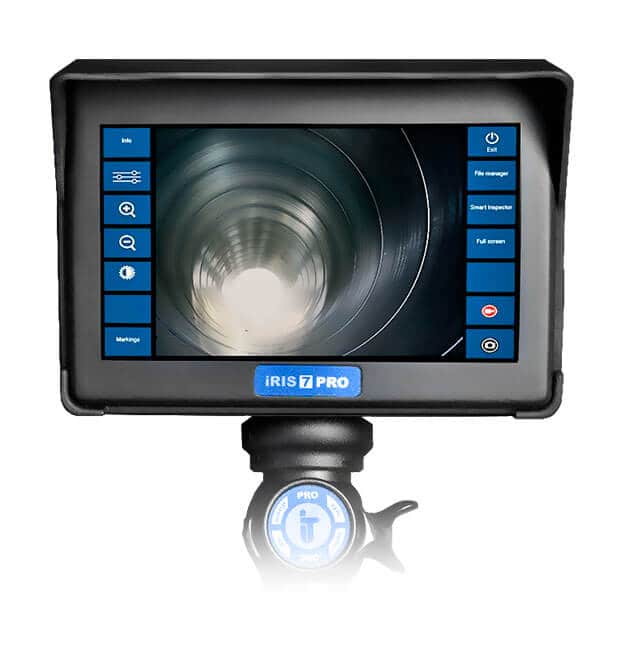
Today modern videoscopes have high resolution monitors which permit to see very small details in the inspected area. LED light sources provide good illumination in completely dark conditions. To achieve the best results mechanics use videoscopes with the most powerful LED bulbs.

Our Rigel Videoscope was used on Graveyard Carz!

Video Borescopes have long be used to inspect inside engines, gas tanks and other hard to visualize places on auto mobiles. Borescopes can be used to look into any cavity that has a large enough access point to insert the probe. So there really is not limit to the ways videoscopes can be used by mechanics or anyone working on vehicles.

We recently had our Rigel Videoscope featured on an episode of Graveyard Carz, they used the Rigel to look into rocker panels and uni-body rails of a car being restored to check for rust.

Rigel car inspection

Rigel being used to inspect the body of the car

Rigel on Graveyard Carz

Rigel showing the rust in the body panels of the car

Check out the video on our youtube channel.

We would like to thank Graveyard Carz for sharing this footage with us.

New Videos of Triton Push Camera, with Self Levelling Camera Head.

We have posted some more videos highlighting our new Triton Industrial Pipe Inspection Camera on our YouTube Channel. please take a moment and check them out, let us know what you think. Also let us know what video’s you would like to see us make in the future!

TritonTriton Self Levelling Camera Head

Triton

Triton with self levelling camera head inspecting laterals

These videos feature the Triton with the self levelling camera head. The pipe camera head is 1.68″ in diameter and the rest of the units features the same specs listed on our website. This option is not currently advertised on the website, but just contact our resident tech specialists through the website or over the phone for more information on this version of Triton.

Exploring the Reasons for Price Differences Between Similar Looking Video Scopes

When looking for a Video Borescope the biggest factor to take into account is the job that needs to be done, and then the budget you have to work with. The price of a unit does not necessarily determine the quality of a product, but is a good thing to keep in mind when comparing scopes. High end scopes are going to be more expensive than economy scopes, the main reason for this is that higher end scopes tend to use higher resolution video chips in the camera heads, the better the quality of the camera, the better your inspection results will be. High quality camera chips also ensure that any light provided will be used to the best advantage of the recording device.

Borescope automotive inspections

Scopes like our Orion II Video Borescope have a higher resolution CMOS camera chip than the Voyager Video Borescope, with more LEDs built into the tip of the scope. This means that while the specs of these scopes may appear to be similar, you will get much better image quality from the Orion. Also the more costly scopes become, the more features they tend to offer the user such as articulation, different focal ranges and structure and design of the probe. Higher quality scopes are designed for someone that is using their scopes more often and for more intricate inspections. Economy scopes are designed to be affordable options for someone who may not use their scope enough to justify a higher price tag, but who still wants the advantages gained by using videoscopes to do inspections. It’s best to talk to a representative to determine which scope will meet your needs and budget the best.

Our Rigel Video Borescope used for Field Research by Oklahoma State University

Dr. Stanley Fox, and Enrique Santoyo-Brito from Oklahoma State University contacted us looking for a videoscope to aid them in their research regarding care of young leopard lizards by adult leopard lizards in deep rock crevices in Chile. Our sales team determined the Rigel 2-way Articulating Video Borescope would be the best fit for their research, as they wanted to be able to visualize inside of rock refuges used by the Leopard Lizard, and take video and still images of the lizards inside the refuges. These refuges are located in natural rock formations with small entry points and little natural light. The Rigel was a good fit with its articulated probe and built in LED lights, to allow them to get a good look at the larger areas in the rock formations and locate the lizards. Dr. Fox shared some of his results with us, including videos and images of lizards in the deep rock crevices, and let us know he was very happy with the results he got using the Rigel Video Borescope.

XT512 Portable Locator, the Best Tool to Precisely Locate the Camera Head

One of the huge benefits of visual remote pipe inspections is being able to visualize problems, so you know exactly what to expect when going in to repair something. Underground pipes are especially susceptible to leaks and roots causing problems in hard to reach places. One problem with traditional pipe inspection equipment is while you can visualize the problem inside the pipe, it can be hard to locate the exact spot where the camera head is in the pipe to minimize the amount of time and effort involved in getting to the problem area. To solve this problem some push cameras are now being made with locators built into the camera head. The Viper S Portable Push Camera is Medit’s push camera with a built in 512 HZ sonde locator. Medit teamed up with Schonstedt to provide you with the best locator for your money. The XT512 Sonde and Camera Locator gives you the ability to precisely locate the camera head during inspections. The locator locates the the 512Hz Sonde in the camera head of the Viper and tells you the depth. This can make planning for pipe repairs run much smoother. This locator is small and lightweight making it portable and easy to use at any job site. The XT512 locator can be purchased as a full set with the Viper S, or separately to use with any camera head with a 512Hz Sonde in it. For more information on these handy units please contact our sales team at Fiberscope.net


What are the differences between Viper and Viper-S Push Cameras?

Medit Inc, offers two versions of our very popular Viper Portable Push Camera, The “Viper” and the “Viper S”. These cameras are designed as an economical option for inspections of sewer, pipe, HVAC ducts, chimneys etc. There are a couple of key differences between the Viper and the Viper-S models. The most noticeable difference is the traceable 512 Hz sonde located in the head of the Viper S, when paired with a sonde locator this allows the head of the probe to be located through the ground, ceilings, walls etc to accurately identify the area that is currently being visualized. The Viper S also features a slightly smaller diameter camera head (23mm (0.9”) compared to the original Viper (38mm (1.5”)). Both camera heads feature color CCD camera heads with sapphire glass lens to protect from scratches, and come in 20 and 40 meter lengths. Both units are highly portable coming in at 10.5kg for the Viper S and 13kg for the Viper. Both units also come in waterproof cases with built in 7” color monitors. The Viper S is able to record video and still images to a SD card, a hard drive through the USB port, or to a TV. The Viper is able to record video and store it on a hard drive through the USB port. Over all the Viper S is a slightly lighter and updated version of the Viper with the capability of locating the camera head, both units were designed to give the best results for the price point, and to offer the rugged durability our customers have come to expect from our products. For further information about either the Viper or the Viper S units please contact the Sales Team at Fiberscope.net.

Viper Portable Push Camera 

Viper Portable Push Camera

Viper S Portable Push Camera

Viper S Push Camera with Locator

Looking for the Brightest light source for your borescope? Look no further than Metal Halide Light sources from Medit Inc.

Customers often ask which light sources are best for remote inspection, now the answer to this will vary depending on the specific application, but the brightest illumination will be provided by Metal Halide Light Sources. Metal halide lights provide very bright, clear white light, that are focused with a patented process, as in our MS-24 model, to provide the most efficient light output.

metal halide light source
Continue reading

Our new industrial blog about videoscopes has launched!

Dear colleagues and friends!

Welcome to our new blog that has been designed for NDT professionals specializing in remote visual inspections (RVI)! Follow us for lots of great advices, news, tips, articles, photos and videos about using borescopes, videoscopes, sewer and drain cameras, snake cameras, etc.

We want to present the most relevant, fresh and regularly updated content. We invite you to be a part of our community and share your images, experiences and techniques with other colleagues.

Don’t forged to check out our borescope on-line store at www.fiberscope.net