• /
  • /

Military · police · customs · rescue · remote visual inspection

See the risk before direct access.

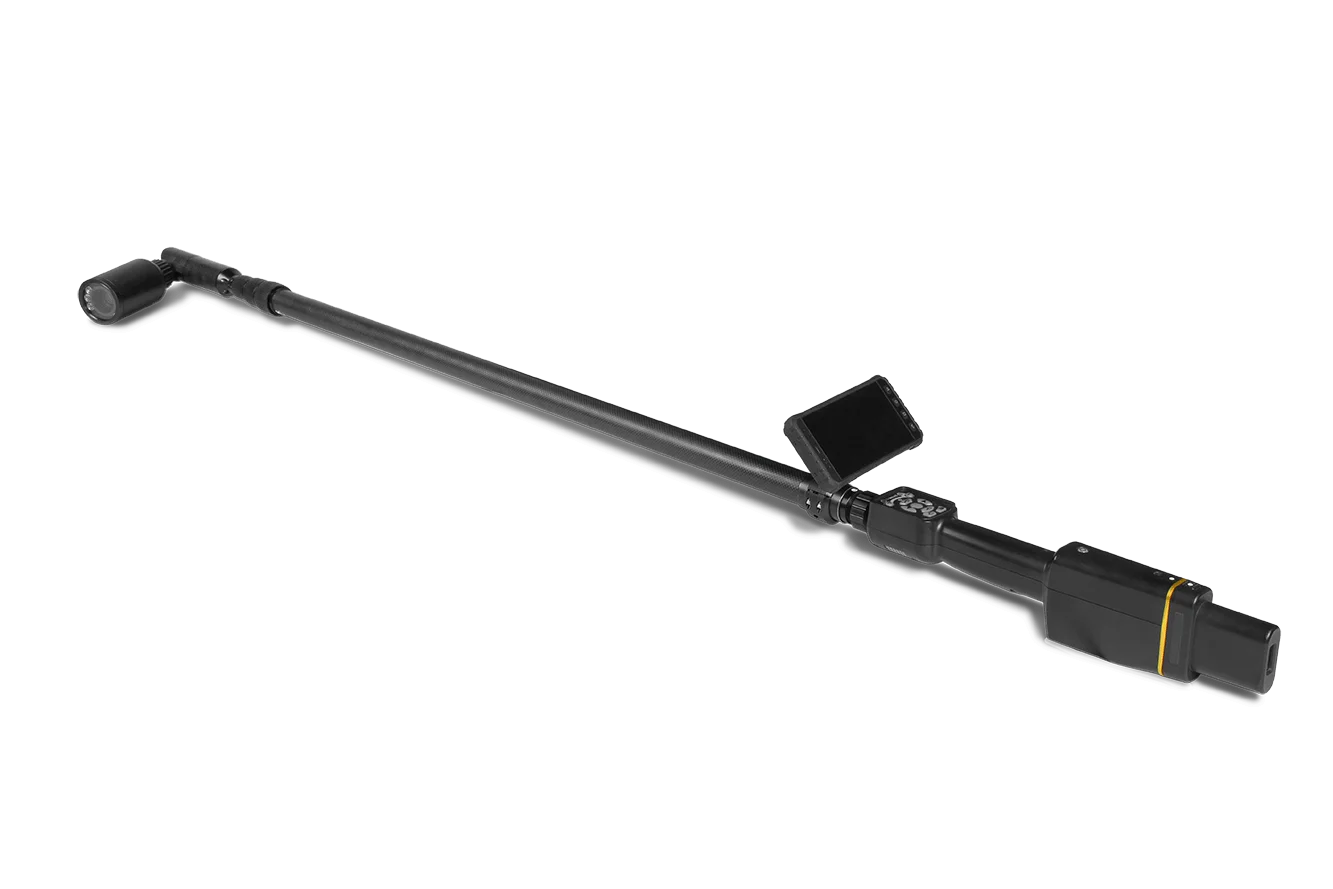
A tactical borescope or pole camera gives qualified teams a controlled view into hidden, enclosed, elevated, or hazardous areas before they decide how to proceed.

Vehicle and compartment inspectionConfined spacesVisual documentation
Military, police, and rescue remote visual inspection

The visibility problem

Unknown spaces create decisions with incomplete information.

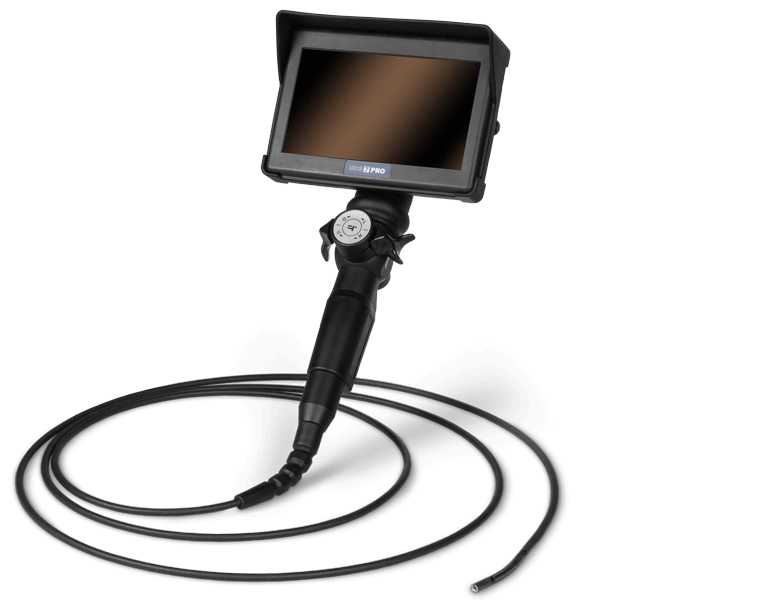
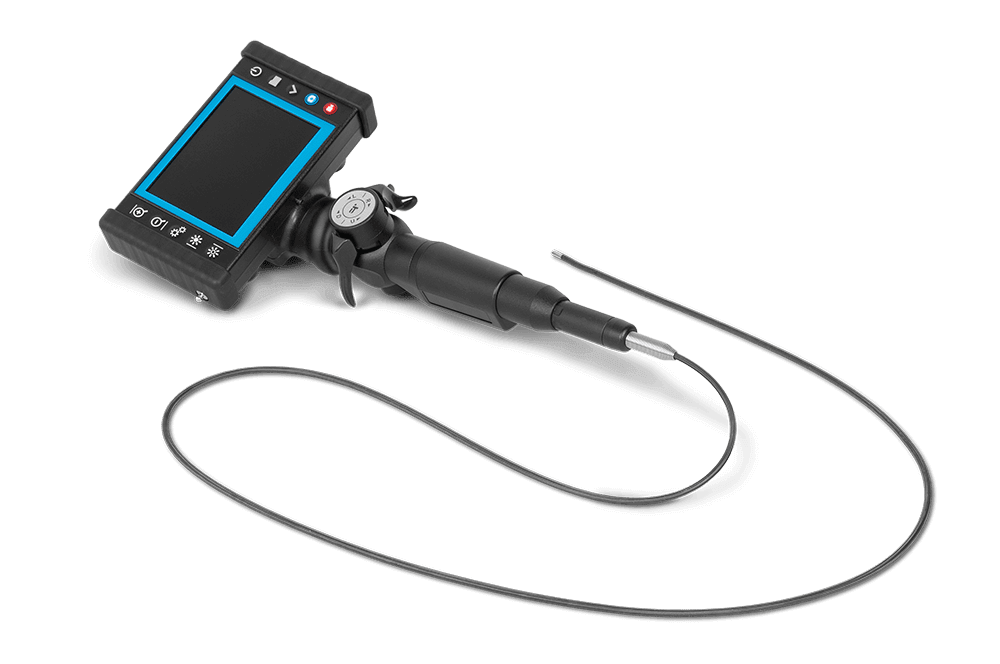
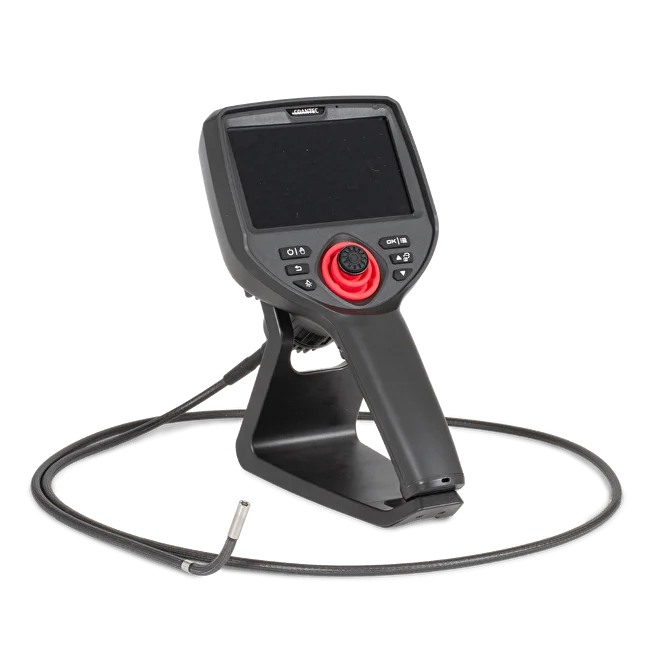
A tactical borescope is a compact remote visual inspection camera used to view areas that are difficult, dangerous, or impractical to inspect directly.

Police, military, SWAT, customs, border security, EOD, rescue, and maintenance teams may need to examine vehicle cavities, structural voids, equipment internals, packages, tanks, or confined areas without unnecessary entry or dismantling.

The useful outcome is controlled visibility: the operator can examine an accessible area, document what was visible, and decide whether to continue, stop, escalate, or use another approved method.

Start with the mission and the access route. Define the target, opening, distance, viewing angle, illumination, recording need, environmental conditions, and applicable agency procedure before selecting equipment.
Users and operational contexts

One inspection method. Different decisions.

The camera type changes with the location, access geometry, lighting, and level of stand-off distance required.

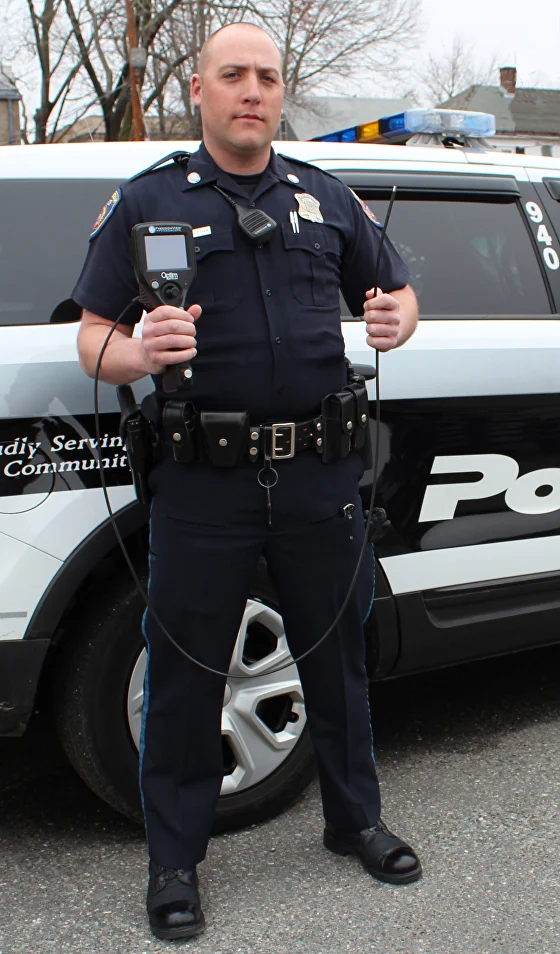
01 · LAW ENFORCEMENT

Search hidden vehicle and building areas

Inspect accessible panels, compartments, wall voids, ceilings, equipment spaces, and other difficult-to-see locations with less unnecessary dismantling.

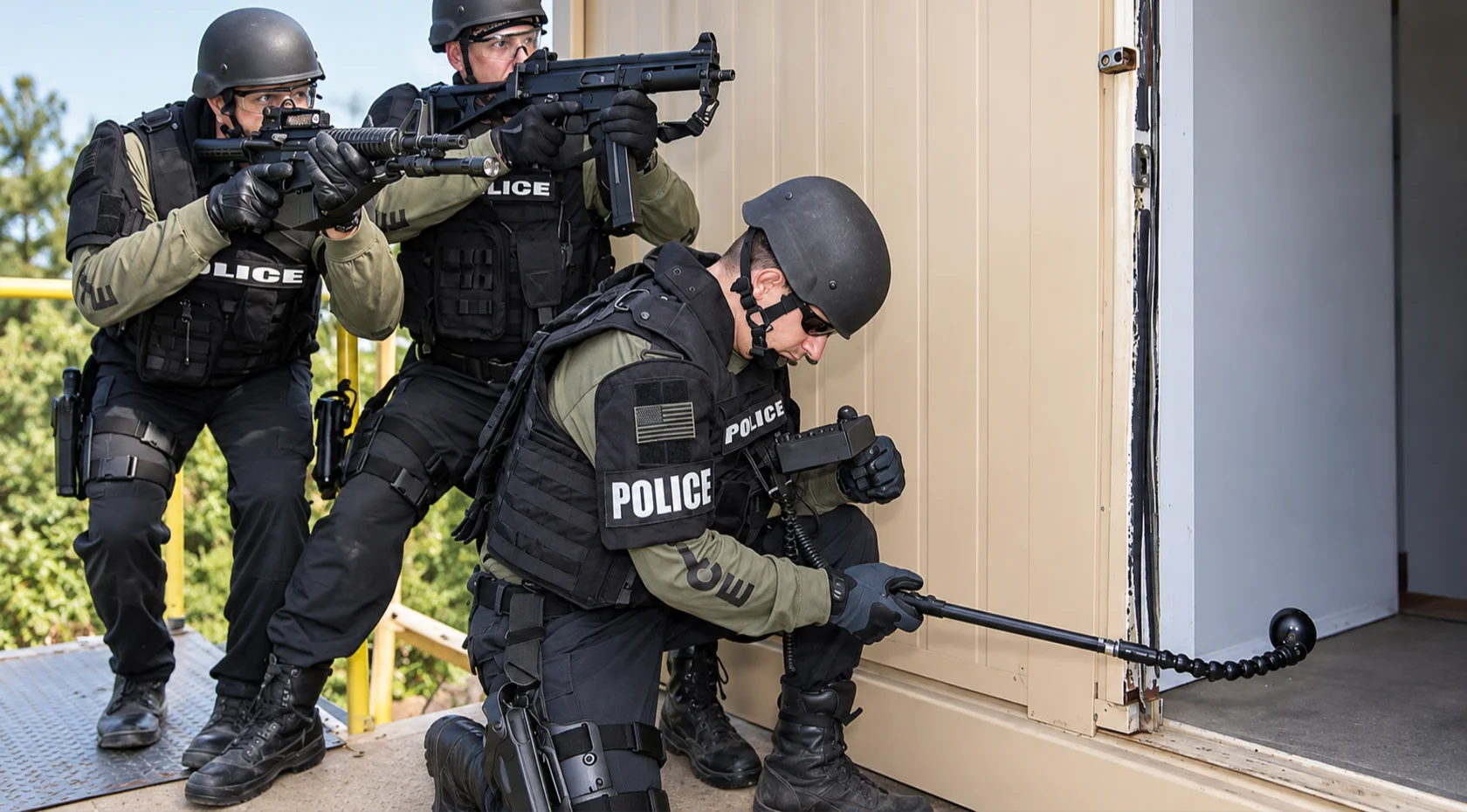
02 · SWAT AND TACTICAL

View around obstacles

Use suitable borescopes or pole cameras to assess enclosed or partly hidden areas from a controlled position before a team changes its approach.

03 · MILITARY

Inspect vehicles and equipment

Support visual checks of accessible machinery, service vehicles, aircraft, marine equipment, field systems, and precision components.

04 · CUSTOMS AND BORDER

Target the search

Examine accessible luggage, containers, tanks, panels, vehicle cavities, and modified compartments while limiting unnecessary disassembly.

05 · EOD AND IEDD

Match the camera to the environment

Use only equipment that meets the applicable safety classification, agency procedure, and hazard assessment for the specific location.

06 · SEARCH AND RESCUE

Check narrow voids

Look into accessible debris fields, structural cavities, and confined spaces when direct entry is not yet appropriate.

Portable videoscope used for remote visual inspection

A portable view before action

The value is controlled visibility.

A professional inspection camera combines reach, tip illumination, a live display, and—on suitable systems—photo and video capture.

That can help a team record what was inspected, where a visible condition was located, and what information supported the next approved action.

It also allows maintenance and security personnel to share the same visual evidence with supervisors, investigators, specialists, or service teams.

Operational value

What remote visual inspection can support.

01

Reduced exposure

Inspect an accessible hidden area before direct contact, entry, or disassembly.

02

Faster assessment

Target areas that need closer attention instead of opening every possible location.

03

Less disruption

Use an existing opening or gap where appropriate to avoid unnecessary property or equipment damage.

04

Useful records

Capture still images or video when documentation, reporting, or maintenance comparison is required.

05

Clearer next step

Use the visible information to decide whether to proceed, stop, escalate, or change inspection methods.

Access-method selector

Choose the camera from the space you need to see.

Probe Outer Diameter (OD)

Critical

Clears entry access ports, turbine nozzle guides, or narrow heat exchanger tubes.

Verification step

Verify minimum clearance = Probe OD + 0.5mm safety margin.

Target specification

4.0mm – 6.0mm for general aviation/industrial; < 3.8mm for ultra-fine valves.

Borescope or pole camera?

Two tools for two access problems.

Small opening · internal route

Video borescope

  • Vehicle panels and body cavities
  • Tanks, compartments, equipment, and machinery
  • Wall voids and narrow structural openings
  • Precision maintenance and small components

Reach · angle · stand-off distance

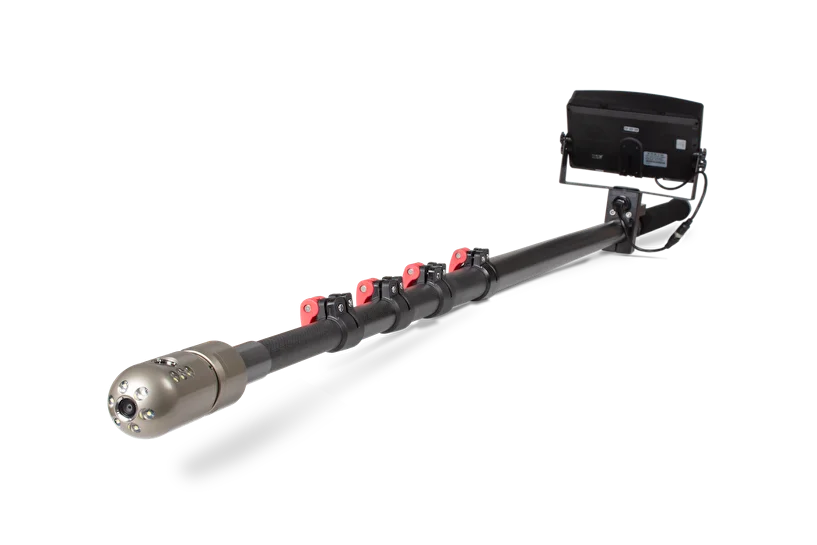
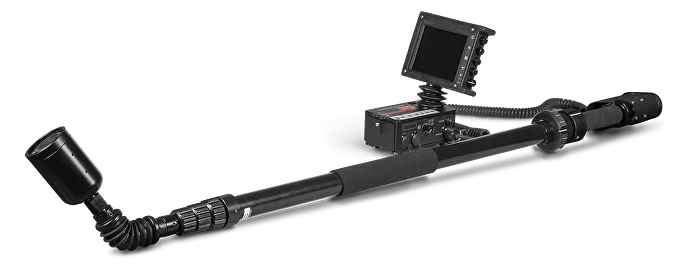
Pole camera

  • Under-vehicle and elevated inspection
  • Views over barriers or around obstacles
  • Confined-space assessment from outside
  • Roof, ceiling, vault, manhole, and facility checks

Selection criteria

Specify the route before comparing products.

The most capable camera is still the wrong choice if it cannot fit, reach, turn, illuminate, record, or operate safely in the intended environment.

01 · ACCESS

Probe or camera size

Measure the narrowest opening and clearance along the complete route.

02 · DISTANCE

Working length or pole reach

Allow enough length to reach the target while retaining safe, controlled handling.

03 · CONTROL

Articulation and view

Decide whether the operator must steer around corners, pan, zoom, or use a side view.

04 · LIGHT

White or infrared illumination

Match the light source to the inspection objective, visibility requirement, and approved procedure.

05 · RECORD

Photos and video

Define how files will be captured, labelled, stored, reviewed, and included in reports.

06 · SAFETY

Environmental rating

Confirm required hazardous-location, ingress, temperature, durability, or nonconductive requirements.

Suggested FIBERSCOPE systems

Match the system to the access, distance, and environment.

These product families address different remote visual inspection problems. Confirm the exact configuration and approval requirements before purchase.

Inspection evidence · click to enlarge

Record the view and preserve its context.

A useful inspection image identifies the location, viewing direction, surrounding geometry, and the equipment configuration used to capture it.

DarkSite Covert Tactical Camera Video Footage
Tactical Pole Camera CYCLOPS SD ZOOM for Confined Space Inspection

Military and police borescope FAQ

Questions to answer before selecting equipment.

What is a police borescope used for?

A police borescope is used to inspect accessible hard-to-reach areas such as vehicle compartments, luggage, wall voids, equipment interiors, and confined spaces when direct viewing or unnecessary dismantling is undesirable.

What is a military snake camera?

It is a portable inspection camera with a small probe or camera head that can be inserted into tight or hidden spaces for visual inspection, equipment maintenance, vehicle checks, and confined-space assessment.

Can a borescope be used for vehicle searches?

Yes. With an appropriate access route and procedure, a borescope can examine gas tanks, door panels, body cavities, cargo areas, underbody sections, and other hidden vehicle compartments.

Is a borescope useful for customs and border security?

Yes. Customs and border personnel can use suitable borescopes to visually inspect accessible areas in vehicles, containers, luggage, tanks, and hidden compartments with less unnecessary disassembly.

What is the difference between a borescope and a tactical pole camera?

A borescope enters a small or enclosed space. A pole camera provides reach and stand-off distance for viewing under vehicles, over barriers, around obstacles, or into confined areas from outside.

Do tactical borescopes record video?

Many professional systems capture photos and video. Confirm the file format, storage, annotation, export, and evidence-handling requirements for the selected model and agency workflow.

What features matter most?

Start with access size, working length, articulation, view direction, illumination, recording, portability, durability, and any environmental or hazardous-location rating required by the application.

Are explosion-proof borescopes needed for fuel-tank or EOD work?

They may be required in specified hazardous environments. Selection must follow the site classification, applicable safety standards, agency procedure, and the exact certification of the inspection system.

Can a borescope reduce inspection time?

It can help personnel target accessible areas without unnecessary dismantling or entry, making some searches and assessments more focused. Actual time savings depend on the procedure and inspection route.

How do I choose the right system?

Define the target, access opening, inspection distance, required view, lighting, recording, deployment conditions, hazards, and operator workflow. Then match those requirements to the borescope or pole-camera configuration.

FIBERSCOPE tactical inspection support

Choose the camera from the mission, access route, and environment.

Tell a FIBERSCOPE specialist what must be inspected, the smallest opening, required reach, view direction, lighting, recording needs, deployment conditions, and any safety classification.