High-temperature inspection · heat-resistant borescopes · custom systems

Heat-resistant borescopes: choose the right system for real thermal exposure.

High-temperature inspection is not only about a maximum temperature rating. The right system depends on actual probe temperature, exposure time, cooling method, access geometry, viewing direction, and the safety margin your process requires.

Short-duration heat exposureActive coolingExtreme-temperature systems
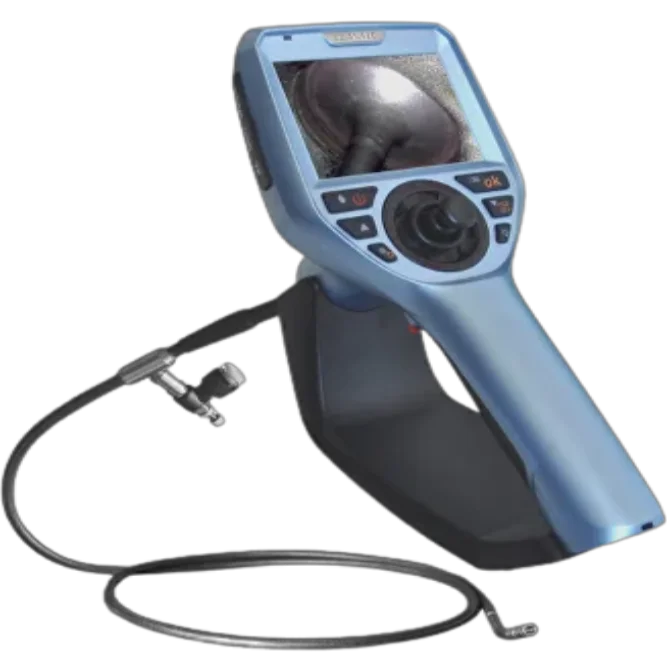
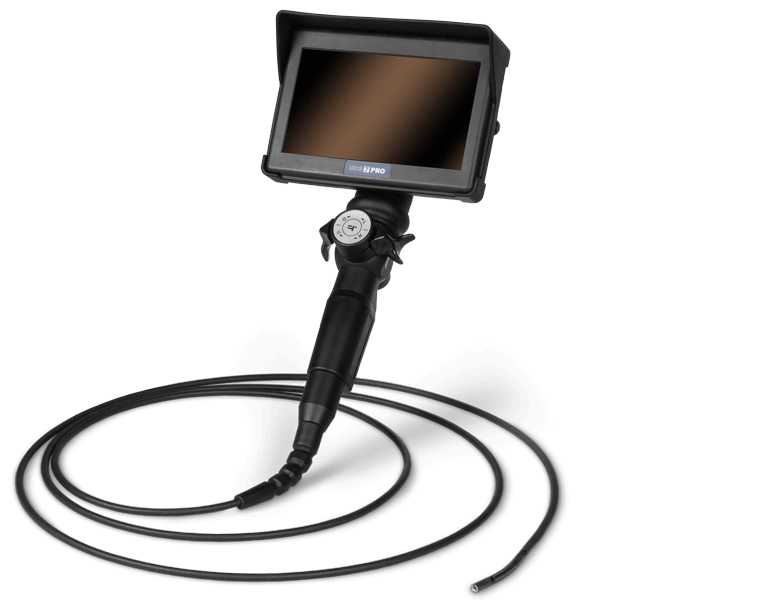
Heat-resistant borescope for industrial inspection
Quick answer

What borescope do you need for high-temperature inspection?
The right choice depends primarily on actual temperature at the inspection point, exposure time, and whether the process can be stopped. Short inspections may use protected videoscopes around 140°C / 280°F for limited periods, sustained inspection may require air-cooled systems around 200°C / 390°F, and extreme industrial processes may require custom systems engineered for environments up to 2,000°C / 3,630°F.

Why high-temperature inspections are different

Heat changes both the inspection method and the equipment risk.

Gas turbines, furnaces, boilers, kilns, casting equipment, engines, combustion chambers, heat exchangers, and similar assets can expose an inspection probe to temperatures far above what a standard videoscope can tolerate.

A conventional borescope inserted into an excessively hot area may suffer permanent camera sensor damage, deterioration of adhesives or electronics, discoloration or failure of optical components, probe jacket damage, loss of articulation performance, shortened service life, or sudden image failure during an inspection.

In many facilities, waiting for equipment to cool is not practical. Cooling a furnace, turbine, or production system can mean hours of downtime.

The objective is not merely to survive the heat. The system must continue providing a usable image while keeping sensitive camera and probe components within their allowable thermal range.
Thermal exposure selector

Start with the way heat reaches the probe.

Select the condition that most closely matches the inspection. This is a starting point for equipment selection, not a substitute for model-specific operating limits.

01

Elevated temperature · limited dwell time

Use a thermally protected videoscope when the exposure window is short and controlled.

A protected industrial videoscope may suit recently operated equipment when the inspection lasts only a few minutes, the probe can be withdrawn quickly, and the temperature remains within the specified limit.

Confirm first
Actual probe temperature, allowable exposure time, cooldown interval, and withdrawal procedure
Main limitation
A maximum temperature rating must never be treated as a continuous operating condition unless the manufacturer specifies that use.

Short exposure selected.

Three categories buyers should understand

Match the protection strategy to the thermal load.

01 · SHORT EXPOSURE

Heat-resistant or thermally protected videoscope

Best for fast inspection of recently operated machinery where exposure time can be carefully controlled.

02 · SUSTAINED HEAT

Air-cooled or actively cooled borescope

Best for furnaces, boilers, turbines, and longer inspections where the probe must stay in a hot zone for more than a brief check.

03 · EXTREME PROCESS

Custom high-temperature camera system

Best for metal casting, industrial furnaces, and extreme process monitoring where conventional videoscope architecture is no longer enough.

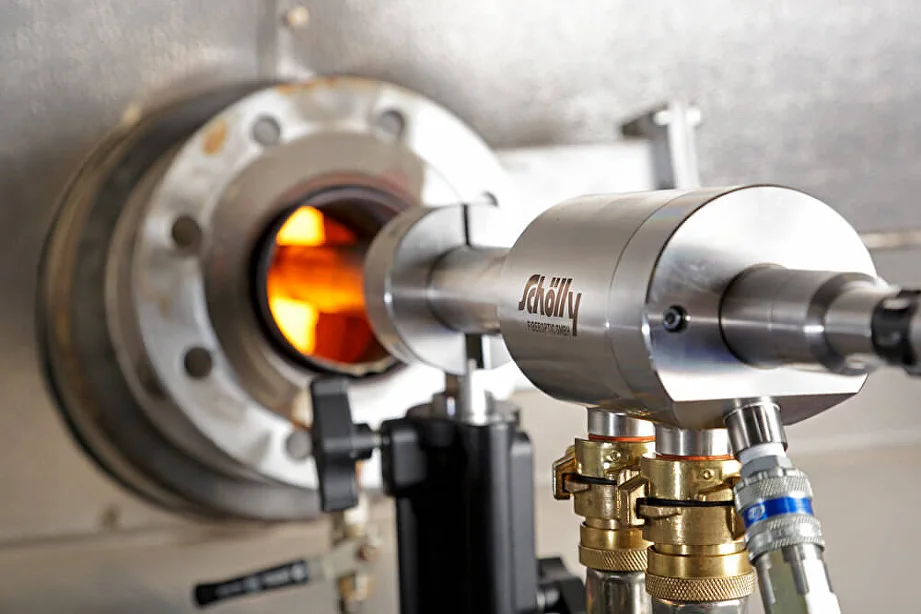
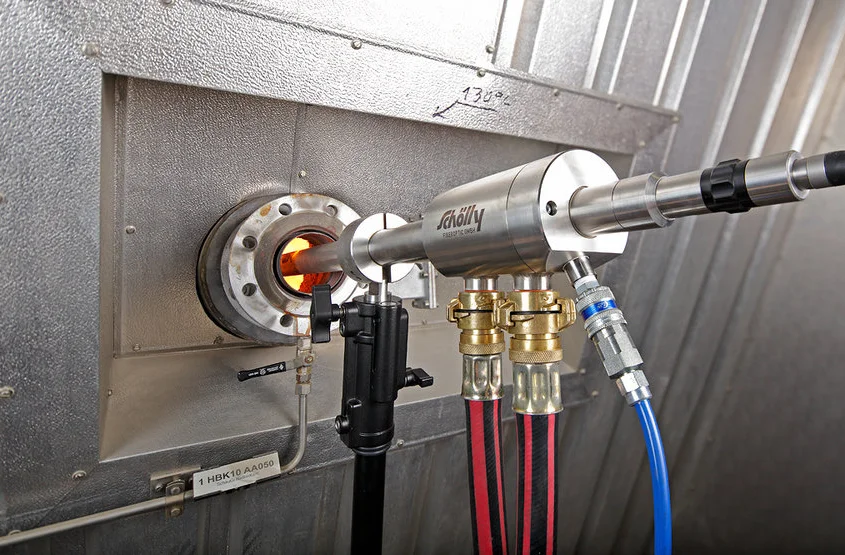
High-temperature borescope inspecting hot industrial equipment

Passive protection vs active cooling

Exposure duration determines when cooling becomes critical.

A short-duration protected videoscope and an actively cooled borescope solve different problems.

Fiberscope lists an industrial videoscope configuration capable of withstanding approximately 140°C / 280°F for up to five minutes, followed by a required cooling period. This can be practical for recently operated equipment when the inspection is brief.

For prolonged use, Fiberscope's high-temperature category includes an air-cooled videoscope designed for environments reaching approximately 200°C / 390°F. Active cooling adds thermal safety margin when the operator needs time to articulate, document multiple defects, or record rather than make a quick visual check.

Buyer's checklist

Define these parameters before requesting a quote.

The specification should describe the real inspection route and thermal exposure—not only the machine's nominal operating temperature.

01 · TEMPERATURE

Measure the real thermal condition

Record normal, maximum, and expected temperature at the actual probe position, including fluctuations and heat rise after insertion.

02 · EXPOSURE TIME

Define dwell time

A probe that survives five minutes at a temperature is not equivalent to a system designed for continuous exposure at that temperature.

03 · PROBE SIZE

Check diameter and clearance

Account for cooling jackets, bends, obstructions, sleeves, and working distance—not only the opening diameter.

04 · PROBE LENGTH

Reach plus handling margin

Specify distance to the target and the extra length required for safe, comfortable handling.

05 · VIEW DIRECTION

Choose how the target must be seen

Forward, side, interchangeable, articulating, or multiple viewing directions may be required.

06 · ARTICULATION

Consider heat under movement

Confirm whether tip articulation remains suitable while the probe is exposed to elevated temperature.

07 · COOLING

Specify the infrastructure

For active systems, confirm air or water availability, pressure, flow, hose length, cleanliness, and emergency procedures.

08 · SAFETY MARGIN

Leave thermal headroom

Unexpected spikes, operator delays, or reduced airflow can consume the margin between normal use and the system's limit.

Step-by-step selection

Match the borescope to the application.

STEP 1

Measure the real inspection temperature

Determine the temperature where the camera head and probe will actually be located. A furnace operating temperature may differ significantly from the inspection-port condition.

STEP 2

Define whether the asset is running

During cooldown, a short-duration protected videoscope may be enough. Live operation is more likely to require active cooling or a purpose-built system.

STEP 3

Calculate realistic inspection duration

Include insertion, target location, articulation, focus, image capture, recording, measurement, and repositioning—not just the time spent looking at the defect.

Application guide

High-temperature remote visual inspection across industrial assets.

Open an application card to review the inspection focus, selection priorities, and the thermal approach supported by the conditions described in this guide.

Application

Inspection application

Inspection focus
Selection priorities
Thermal approach
Typical decision

Selection note: Final suitability still depends on the actual temperature at the probe, exposure duration, access geometry, viewing direction, cooling requirements, and model-specific operating limits.

Extreme temperatures

At some point, a rugged videoscope is no longer the right architecture.

Metal casting, steel production, high-temperature furnace observation, combustion systems, glass production, refractory inspection, and other extreme environments may require a purpose-built high-temperature camera system.

Fiberscope offers specialized systems intended for operating environments up to 2,000°C / 3,630°F, with available diameters from approximately 38 mm and probe lengths reaching 4,000 mm.

Think engineered system, not upgraded standard scope. At these temperatures, probe construction, cooling, optics, insertion geometry, and application-specific configuration become part of the inspection design.

Common buying mistakes

Avoid specifications that look strong on paper but fail in the real inspection.

MISTAKE 01

Buying by maximum temperature only

Maximum temperature is incomplete without the maximum exposure time at that temperature.

MISTAKE 02

Ignoring radiant heat

Hot metal, combustion surfaces, molten material, and refractory lining can add substantial thermal load beyond ambient air temperature.

MISTAKE 03

Choosing too little safety margin

Temperature spikes, slower inspections, reduced cooling airflow, and operator delays can quickly eliminate a narrow thermal margin.

MISTAKE 04

Assuming every component has the same heat limit

Probe sheath, camera sensor, articulation cables, optics, adhesives, and electronics may tolerate heat differently.

MISTAKE 05

Forgetting cooling infrastructure

An air-cooled borescope is useful only when the required cooling source is available and reliable at the inspection site.

MISTAKE 06

Overlooking viewing geometry

A heat-resistant probe is still the wrong tool if it cannot reach or face the target surface.

Suggested products

Compare industrial videoscope platforms for demanding inspection work.

Final suitability depends on the exact temperature, exposure time, cooling requirements, probe dimensions, and configuration.

Expert best practices

Protect the instrument and the inspection process.

01 · EXPOSURE PROCEDURE

Set a maximum exposure rule

Define allowable temperature, maximum dwell time, cooldown interval, and emergency withdrawal procedure before the inspection begins.

02 · COOLING

Monitor airflow continuously

For active systems, verify airflow before insertion and maintain it throughout the complete inspection.

03 · POST-INSPECTION

Inspect the probe after every hot job

Look for discoloration, jacket deformation, damaged articulation, cloudy optics, loose parts, or unusual stiffness.

04 · DWELL TIME

Remove the probe when documentation is complete

There is rarely a benefit to leaving the camera in the heat zone longer than necessary.

FAQ · High-temperature borescopes

Questions and answers

What is a high-temperature borescope?

A high-temperature borescope is an inspection camera or optical system engineered to operate where standard borescopes could be damaged by heat. Depending on the system, protection may include heat-resistant materials, protected imaging components, air cooling, water cooling, or specialized high-temperature optical assemblies.

When do I need an air-cooled borescope?

Air cooling is especially useful when the camera must remain in a hot environment longer than a passive heat-resistant probe can safely allow. Fiberscope's current lineup illustrates this difference with short-term operation at around 140°C / 280°F and prolonged air-cooled operation at around 200°C / 390°F.

Can a borescope inspect a furnace while it is operating?

Yes, but only if the inspection system is specifically designed for the process temperature and thermal conditions. Extremely hot operating furnaces may require custom high-temperature systems rather than conventional videoscopes.

What specifications matter most?

The most important factors are maximum temperature, exposure duration, cooling method, probe diameter, probe length, viewing direction, articulation, image quality, and working distance.

High-temperature inspection support

Start with the environment—not the camera catalog.

Send FIBERSCOPE your actual inspection temperature, maximum exposure duration, operating condition, access-hole diameter, distance to the target, viewing direction, articulation needs, and available cooling infrastructure. Those parameters make it much easier to identify whether the application needs a protected videoscope, an actively cooled system, or a fully customized extreme-temperature solution.