

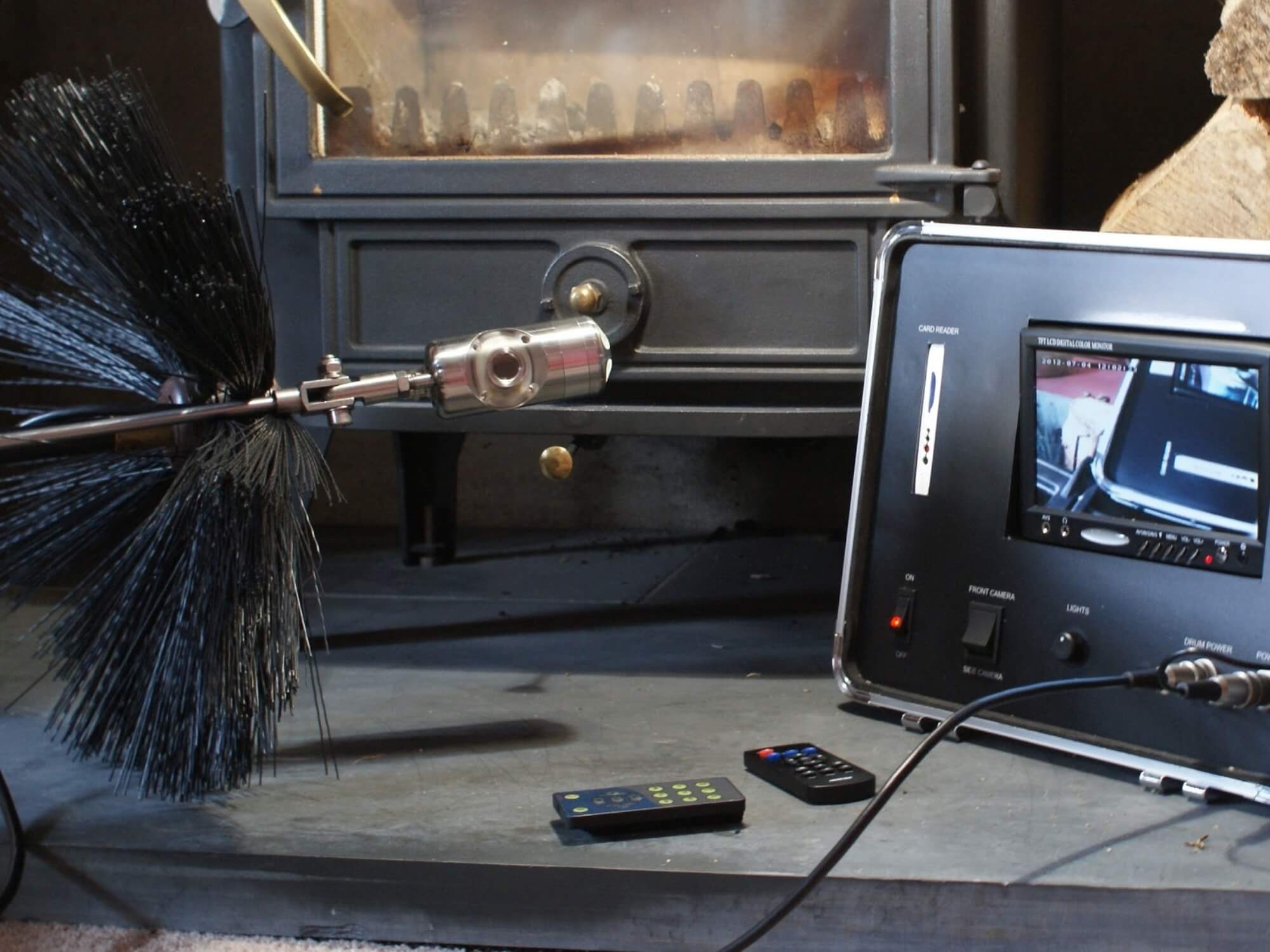
The short answer
Occasional jobs, bottom-up access, tight budget: an entry-level push camera you already use for drains will do, especially when you enter from the firebox, a thimble or a cleanout. Chimney inspection as a daily service: buy a dedicated drop camera. You get a better picture of the liner, you can look at the walls instead of only ahead, and the footage leaves the job with depth and notes on it.
| Entry-level sewer push camera (adapted) | Dedicated drop camera | |
|---|---|---|
| Built for | Small-diameter drain and sewer lines | Vertical flues, ducts, shafts and wells |
| How it travels | Pushed on a semi-rigid fiberglass rod; can be worked up from below and through offsets | Lowered on a flexible cable; gravity does the work from the top |
| Camera head | Small forward-view head sized for pipe (about 1″ or less is common) | Larger head sized for flues: dual-view, or pan-and-tilt with focus control |
| Lighting | Enough for a small pipe; spreads thin in a large flue | More LEDs aimed where the camera looks, with adjustable brightness |
| Observation | Looks ahead; sidewalls pass at an angle | Side view or aimable head reads joints, cracks and openings straight on |
| Image chain | Often standard-definition recording and display | HD display; higher-resolution heads on current models |
| Data entry | Basic: recording, sometimes a footage counter and text keyboard | On-screen depth counter, keyboard notes, organized capture for reports |
| Best fit | Occasional chimney work alongside drain jobs; bottom-up routes with offsets | Sweeps and inspectors who scan flues every day and deliver reports |
What "adapting" a sewer push camera really means
A drain push camera is designed around a pipe that is only slightly larger than its head. The rod keeps the head moving forward, the pipe wall keeps it roughly centered and the lights only have to reach a few inches. A chimney flue changes all three conditions at once.
- The head lies on one wall. In a large or rectangular flue, a small head drifts to one side. Close walls are washed out, far walls are dark, and the view changes as the rod twists.
- Pushing up is hard work; pushing down is unnecessary. A rod is good for climbing from the firebox and working through an offset. Going down a straight flue from the roof, gravity does that job better with a cable.
- The view is forward only. Liner joints, cracks and thimble openings are on the walls. A forward-view head sees them at a steep angle as it passes.
- Documentation is basic. Entry-level systems record video and stills, but they are designed for a quick drain check, not a written flue report.
None of this makes an adapted push camera useless. It means the footage tells you whether the flue is open and roughly what condition it is in; it rarely shows each joint well enough to put in a report.
Image quality: what actually changes the picture
Image quality inside a flue comes from the whole chain, not one number on a spec sheet:
- Light where the camera looks. Soot and creosote absorb light, glazed surfaces reflect it. More LEDs, aimed in the viewing direction and adjustable in brightness, matter more than resolution once the flue is wider than the head.
- Head position. A head that hangs near the center of the flue sees every wall at a similar distance, so exposure stays even.
- Sensor and recording resolution. The file you save is what the customer sees. Standard-definition recording limits how much a still frame can be enlarged.
- Focus. A fixed-focus head is set for a typical distance. Manual focus lets you sharpen a joint or crack that is close to the lens or far across a wide flue.
- Display. A larger HD screen helps the operator spot a defect while the head is still in position, instead of finding it later in the file.
| System | Class | Camera / recording | Display | Lighting and focus |
|---|---|---|---|---|
| VIPER | Entry-level push camera | 1/4″ color sensor; records AVI/JPEG at 720×576 | 9″, 800×480 | 4 to 12 white LEDs depending on head |
| DUCT-SCAN MICRO | Dedicated drop camera | Dual-view head 1024×768; optional pan-and-tilt head with 1.3 MP sensor | 8″ HD IPS, 1280×720 | Dual-view: 6 LEDs forward + 6 LEDs side, adjustable; pan-and-tilt head: autofocus |
| STRAHL PT | Dedicated drop camera | Pan-and-tilt heads with 1/3″ 1.3 MP sensor | 8″ HD IPS, 1280×720 | Adjustable white LEDs; manual focus |
Observation ability: looking ahead vs looking at the wall
The biggest practical difference between the two classes is what the operator can choose to look at.
Forward view (entry-level push camera)
The camera shows what is ahead. It is good for finding a blockage, confirming the flue is open and steering through an offset. Defects on the walls pass at a steep angle and are easy to miss, especially at joints.
Dual view (dedicated drop camera)
A forward camera plus a fixed 90° side camera. The operator switches between them, and rotates the side view around the flue, to read the liner straight on while the head descends. On the DUCT-SCAN MICRO the image can be switched during live recording.
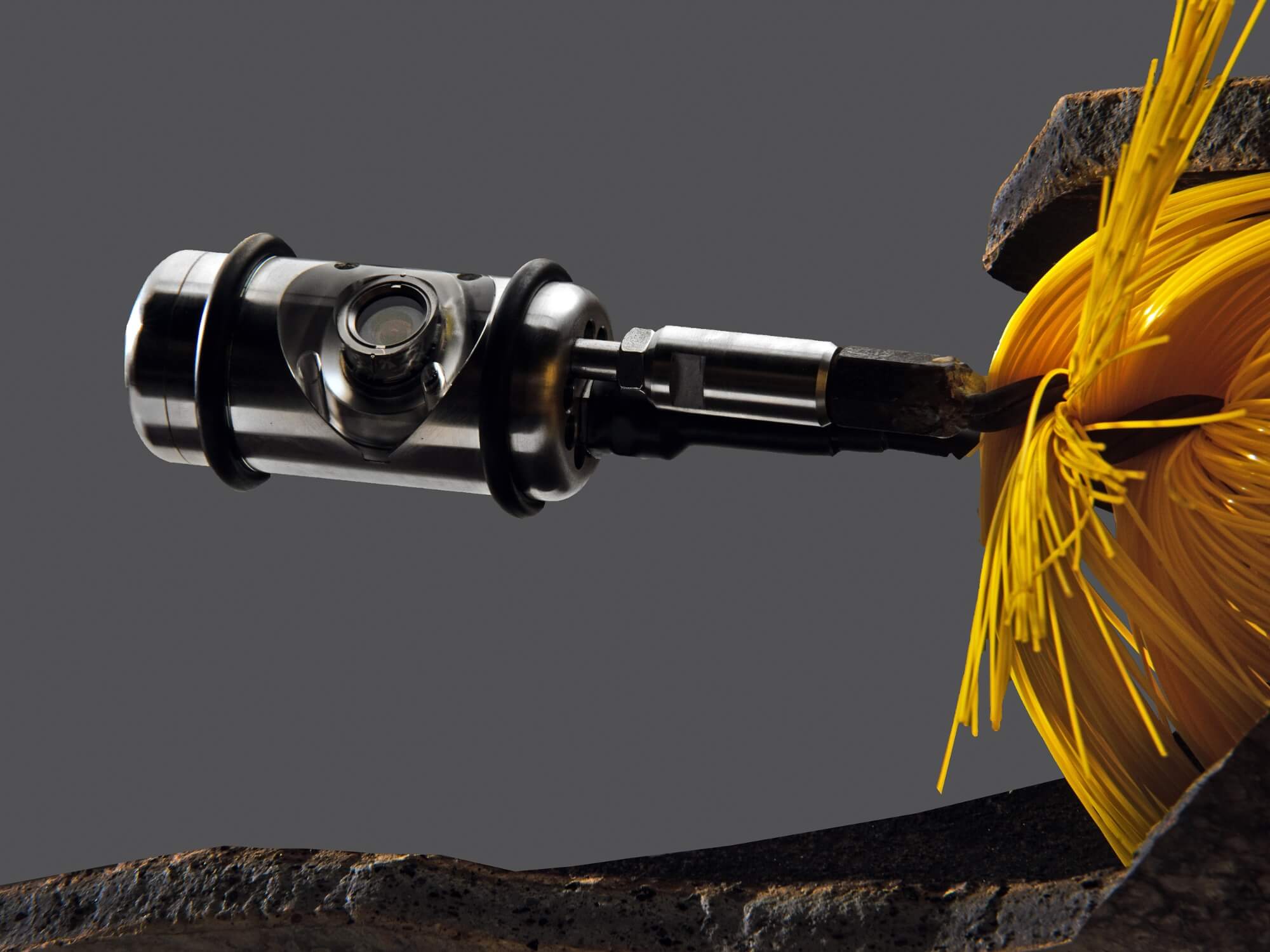
Pan, tilt and focus (dedicated drop camera)
The operator stops the head, aims it at a joint, crack, transition or thimble opening and adjusts focus to get the sharpest frame. This is the strongest option for documenting liner condition, with one limit: the head must pass the cap opening, the damper throat and the liner. The STRAHL PT offers a 2″ (50 mm) head and a 1.3″ (33 mm) head for smaller openings.

Data entry: turning footage into a report
For a professional, the inspection is only finished when someone else can use the footage. CSIA's Level II procedure for masonry chimneys requires a video scan or similar inspection of the chimney interior, checks of the liner for cracks and gaps, and a note in the report when flue size or offsets prevent a scan (CSIA Level II SOP). That makes these features part of the job, not extras:
| Feature | Why it matters | VIPER | DUCT-SCAN MICRO | STRAHL PT |
|---|---|---|---|---|
| Footage / depth counter | Ties every finding to a distance from the access point | On the handheld reel | On screen | On screen, plus digital counter on the reel |
| Keyboard for notes | Labels the flue, address and findings on the footage | Included | Not listed | WiFi keyboard included |
| Microphone | Narrate findings while recording | Included | Built in | Not listed (earbuds included for audio) |
| Storage | Files move straight to the office computer | SD card or USB stick | USB stick | USB storage |
| Battery runtime | A full day of inspections without stopping | Up to 3.5 h | About 4 h | Up to 5 h |
A consistent routine matters as much as the hardware: identify the flue and the direction of travel at the start, pause at every joint, capture a still of each finding with its depth, and note any section you could not see and why.
Which one should you buy?
An entry-level push camera is enough when
- chimney work is occasional and the same camera also earns money on drain jobs;
- you usually enter from the firebox, a thimble or a cleanout and need to push through offsets or connectors;
- the job is "is it open, is anything blocking it," not a full liner report.
A dedicated drop camera pays off when
- you scan flues most days and sell video inspection as a service;
- reports go to homeowners, buyers, insurers or other contractors and must show joints and defects clearly;
- you work tall or wide flues where a small head loses light and centering;
- you also inspect vertical ducts, shafts or shallow wells with the same system.
Many crews end up with both: a push camera for bottom-up routes and offsets, and a drop camera for top-down scans and documentation. If you are not sure, rent first; Fiberscope.net offers a rental program, and the STRAHL PT page notes that rental cost is subtracted if you buy after renting.
Fiberscope equipment to consider
One entry-level push camera and two dedicated drop cameras. Specifications are taken from the current product pages; ask us to confirm the configuration for your flues.
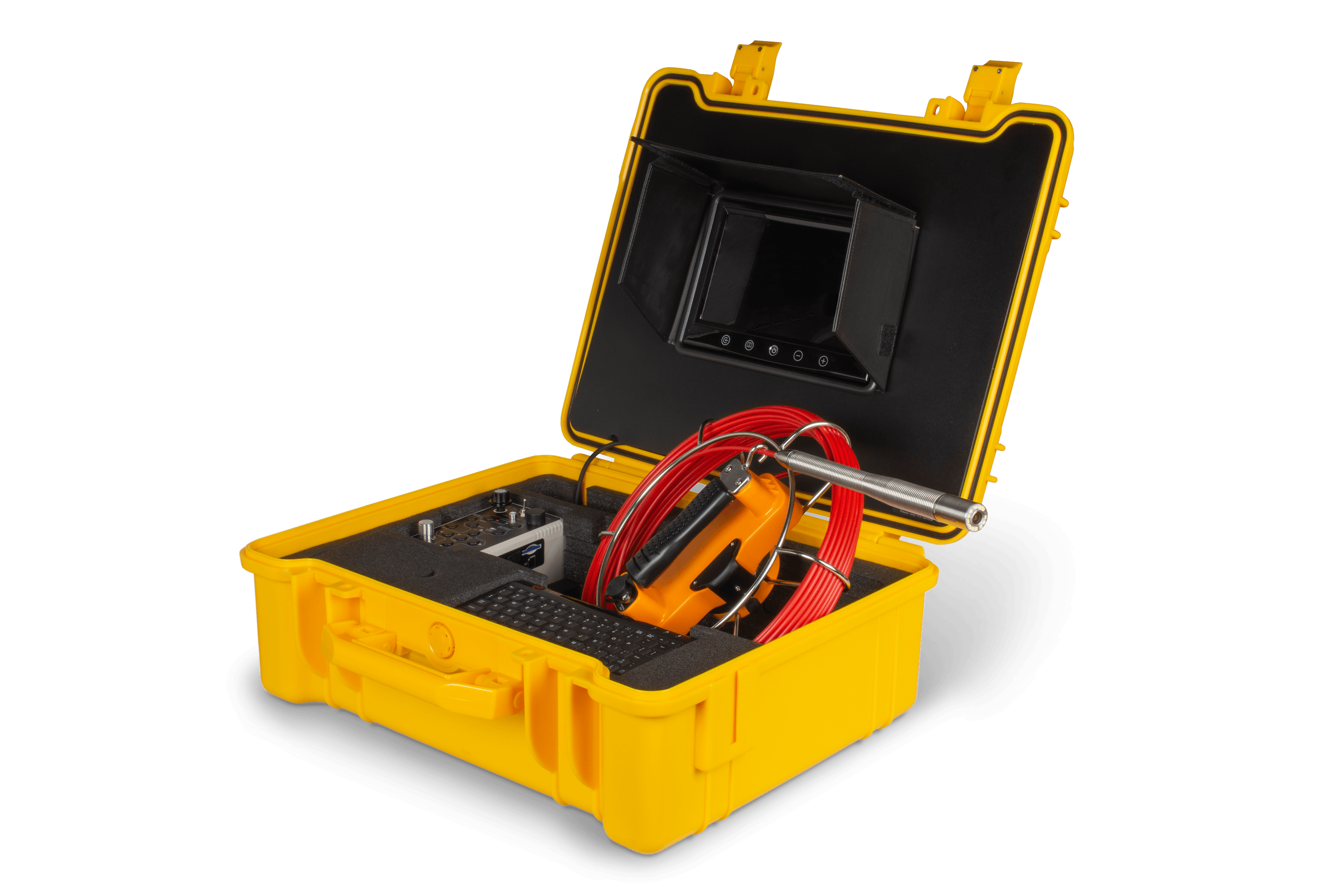
VIPER
Entry level: one camera for drains plus occasional bottom-up chimney checks.
- Interchangeable heads: 0.27″, 0.67″, 1.0″; 1.1″ self-leveling
- Push cable up to 131 ft (40 m), footage counter on the reel
- 9″ monitor; AVI/JPEG to SD or USB; keyboard and mic included
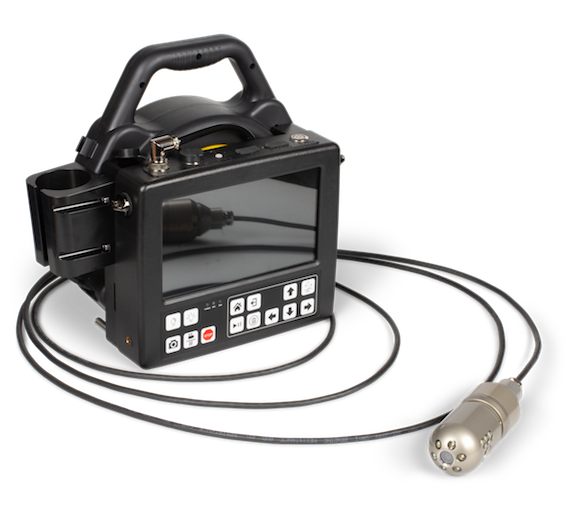
DUCT-SCAN MICRO
Dedicated drop camera for everyday top-down flue and duct scans.
- 65 ft (20 m) drop cable stored in the unit
- Dual-view 1.77″ head: forward + 90° side, 360° endless pan, 6 + 6 adjustable LEDs
- Optional 2″ pan-and-tilt head; 8″ 1280×720 display
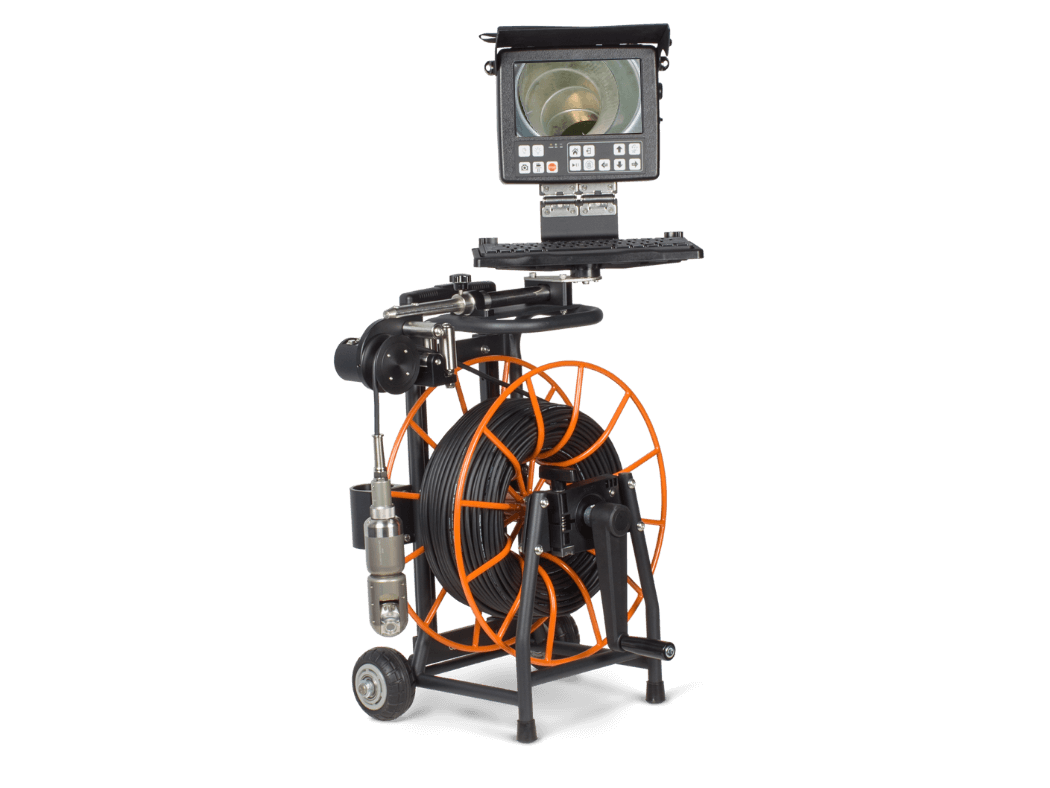
STRAHL PT
Dedicated drop camera with pan, tilt and manual focus for detailed liner reports.
- 2″ or 1.3″ pan-and-tilt heads, 1.3 MP sensor, manual focus
- 360 ft (110 m) drop cable, on-screen footage counter, centering skid
- 8″ 1280×720 display; WiFi keyboard; up to 5 h battery
Need it for one job first? See the rental program. For a wider view of chimney camera types, see our chimney inspection camera guide.
Questions sweeps and inspectors ask
Can I use my sewer camera to inspect a chimney?
Yes, for basic checks. A push camera can confirm the flue is open and is useful when you enter from below and need to get through offsets. For detailed liner documentation, a dedicated drop camera with a side or pan-and-tilt view and more light gives clearer, more consistent footage.
What is the main advantage of a drop camera over a push camera in a chimney?
It lowers from the top on a flexible cable, so there is no pushing, and it carries a larger head with lights and views designed for flue walls. That makes it faster to deploy and better at showing joints and cracks.
Does higher resolution always mean a better chimney image?
No. In a dark, sooty flue, lighting, head position and focus usually decide what you can see. Resolution helps once the wall is evenly lit and in focus.
Which features matter most for inspection reports?
A depth or footage counter, a way to add notes (keyboard or narration), reliable storage such as USB, and still capture of each finding. CSIA's Level II procedure also expects a note when part of the flue could not be scanned.
Can a drop camera be used outside chimney work?
Yes. Dedicated drop cameras are also used in vertical ductwork, shafts, boreholes and, depending on the model, shallow wells.
Not sure which class of camera you need?
Tell us how often you scan flues, your usual access points and flue sizes, and what your reports must show. We'll recommend a setup, and we also rent equipment if you want to try it on real jobs first.
Sources
- Chimney Safety Institute of America: Level II inspection SOP, masonry chimney (rev. 4/5/19)
- Chimney Safety Institute of America: The three levels of chimney inspections
- Fiberscope.net product pages: VIPER, DUCT-SCAN MICRO, STRAHL PT (specifications as listed November 2026)
