Long horizontal run
The camera has to keep moving forward through an extended duct, not simply look through the access opening.
Start with a push camera

Application guide · HVAC remote visual inspection
An HVAC duct camera gives technicians visual access to areas that are otherwise hidden behind ceilings, walls, insulation, and long duct runs. The right system depends less on the longest feature list and more on one practical question: how do you need the camera to travel through the duct?
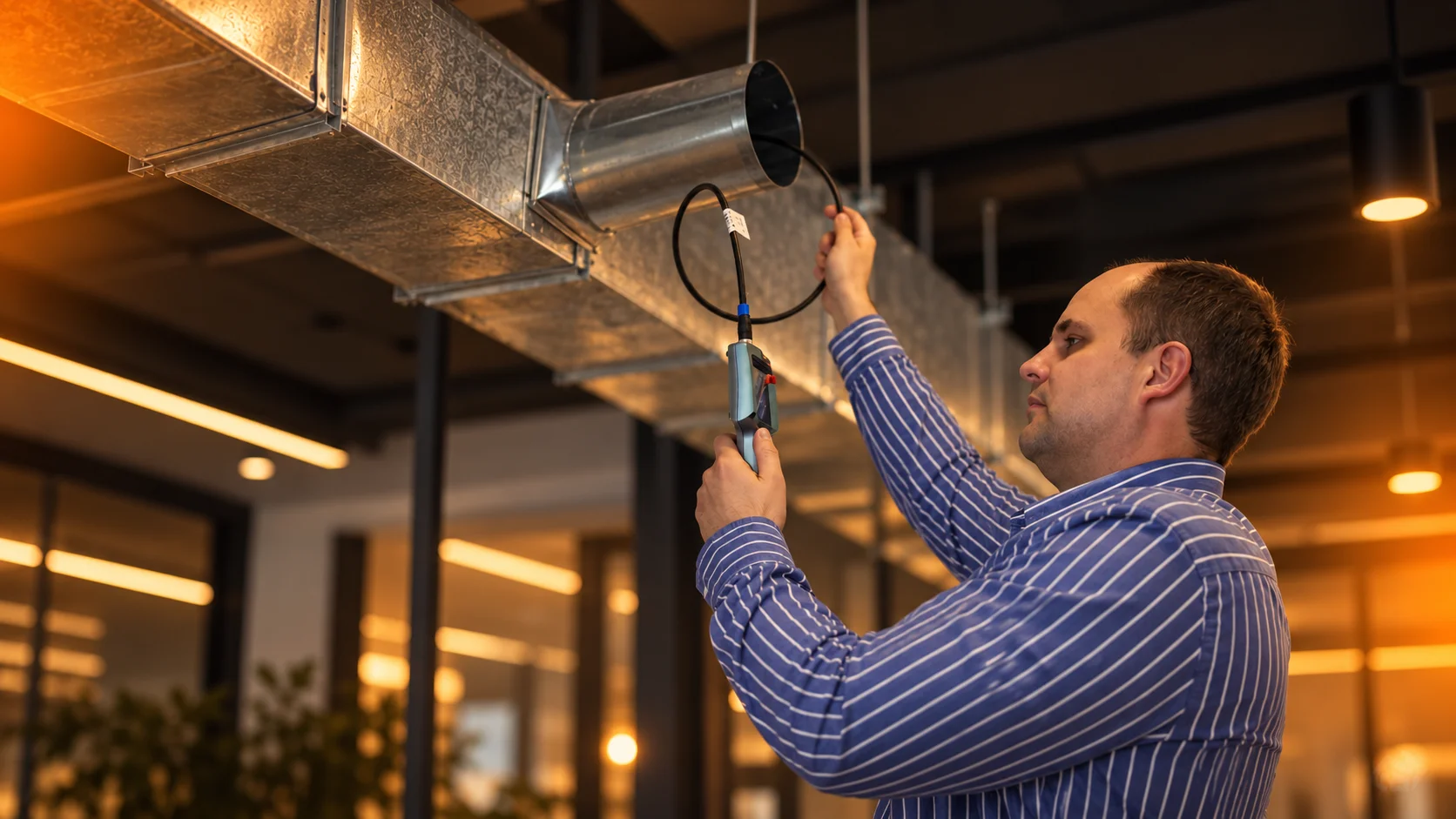
A cleaning result you cannot see is difficult to verify.
A camera turns “we think it is clear” into visual evidence.
The governing variable
One HVAC system can contain long horizontal runs, vertical shafts, tight access points, and large open sections. Start with the inspection path, then choose the camera technology that can move through it and show the surface that matters.
 Access point Inspection target
 The camera has to keep moving forward through an extended duct, not simply look through the access opening.
Start with a push cameraThe inspection travels down or up a vertical passage where gravity and cable control are more useful than a stiff push rod.
Start with a drop cameraThe opening is restricted, the target is relatively close, or the camera must aim around a local obstruction after insertion.
Start with an articulating videoscopeThe duct is large enough that a forward-only view may miss sidewalls, joints, insulation, or features outside the direction of travel.
Start with pan-and-tilt / dual-viewSelection shortcut: reach determines whether the camera can get there; articulation, dual-view, or pan-and-tilt determines whether you can actually see the surface you came to inspect.
Why inspect ducts visually
HVAC contractors use inspection cameras to locate debris, verify cleaning, document conditions for customers, investigate suspected obstructions, and inspect new or existing ductwork without opening the system unnecessarily.
That changes the conversation with the customer. Instead of describing a hidden condition, the technician can show it. Images and video can support a before-and-after record, help explain why cleaning or repair is needed, and confirm that a problem area was actually addressed.
Inspect inaccessible duct sections for dust, debris, foreign material, damaged insulation, or other visible conditions.
Re-inspect after service to confirm that the surfaces reached by the camera are visibly clear.
Record images or video when the customer, facility team, or contractor needs visual evidence of what was found.
Visual inspection can help identify where intervention is needed before panels, ceilings, or duct sections are opened.
A practical selection framework
A camera can reach the inspection area but still fail to show the surface you care about. That is why the best system is not simply the longest one. It is the one that can travel the route, fit the access point, illuminate the space, and point toward the target.
Recommended systems
These are not interchangeable products with different prices. They represent different inspection geometries.
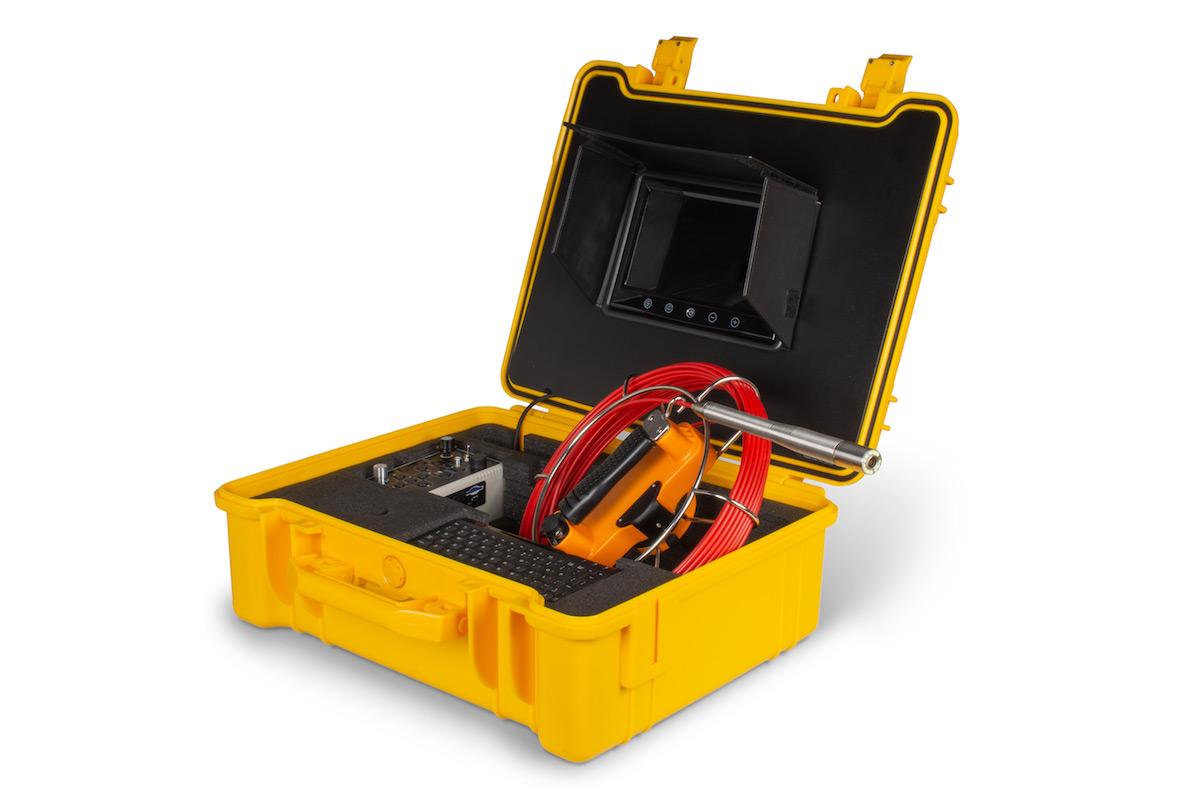
Best when the camera needs to be physically pushed through longer duct sections. VIPER supports interchangeable camera heads and portable image/video recording.
View VIPER ↗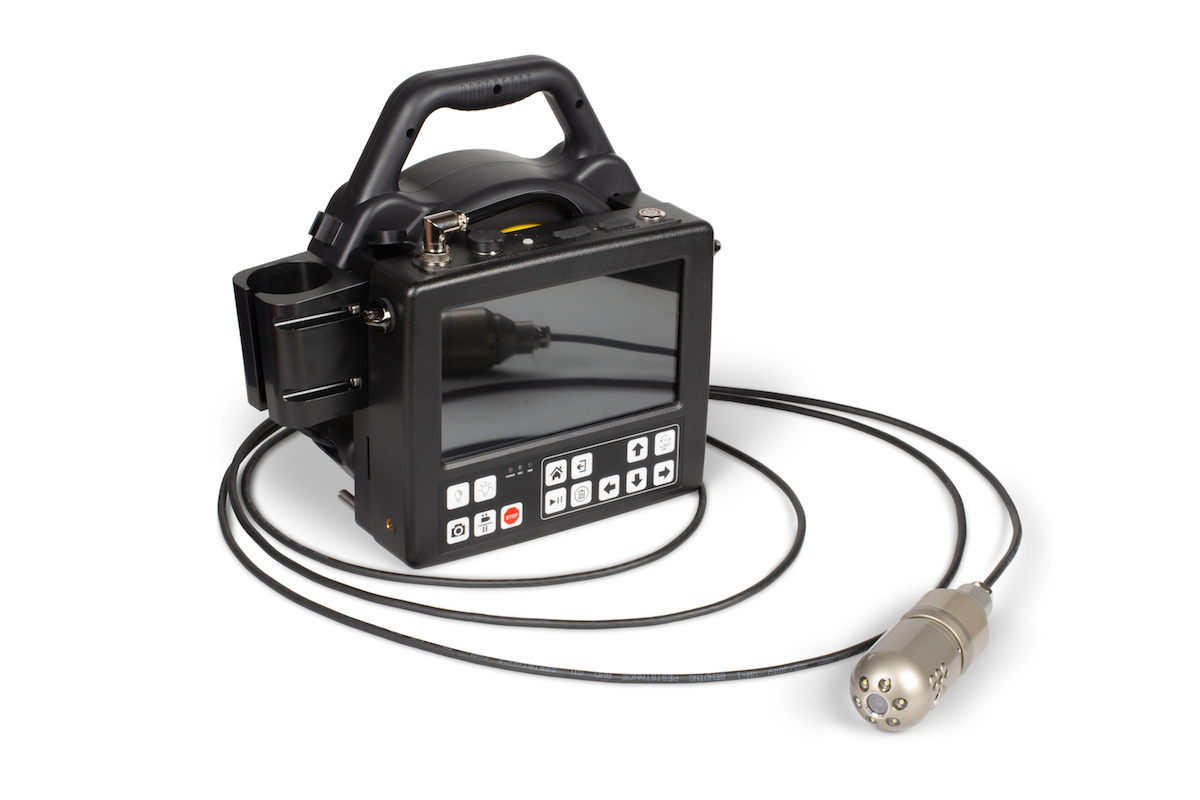
A compact drop-camera system for vertical ductwork, pipes, chimneys, and similar shafts. The standard dual-view head combines forward and 90° side viewing with continuous panning.
View DUCT-SCAN Micro ↗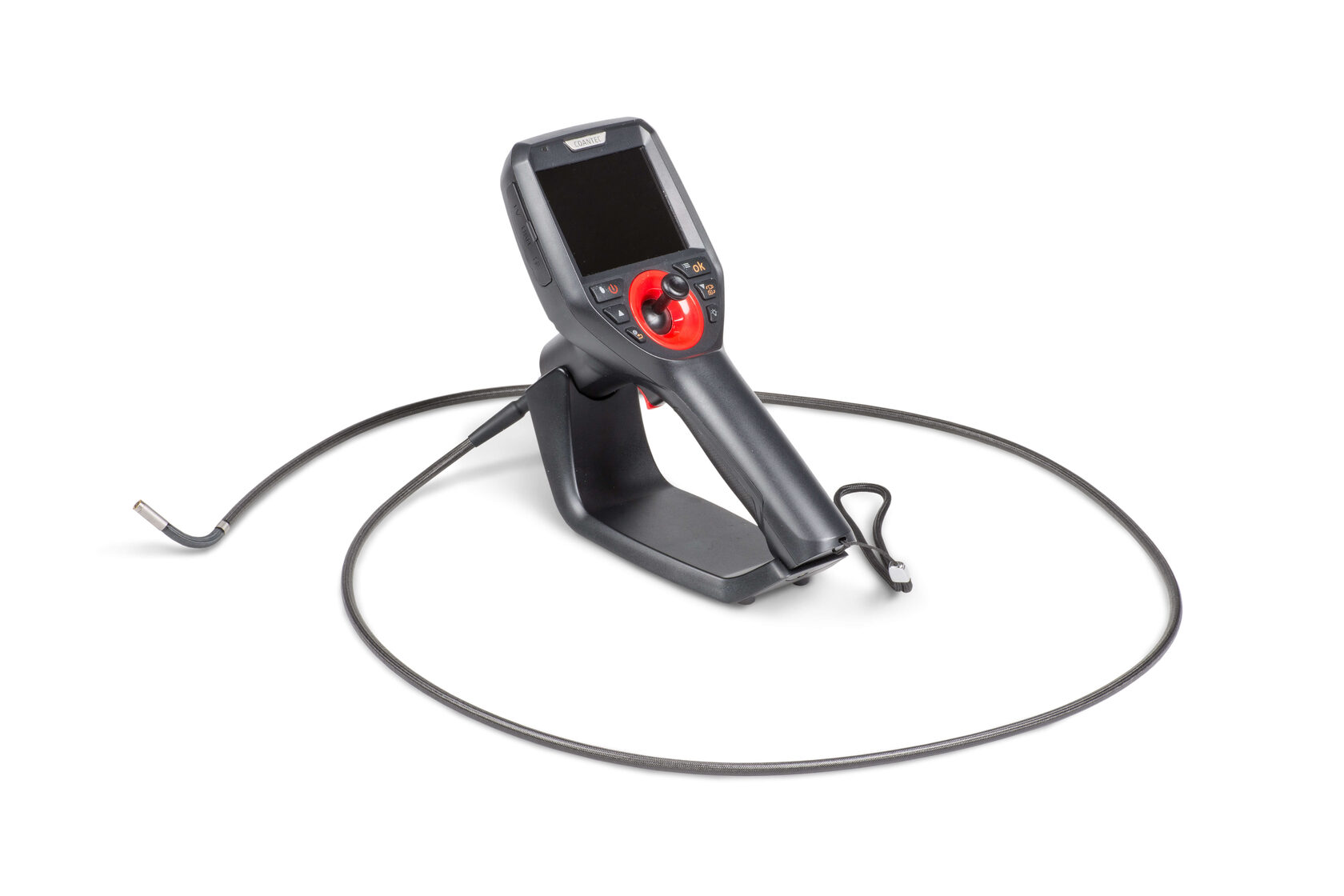
Use a compact articulating videoscope when the opening is small and the target is relatively close. Tip articulation helps redirect the view without withdrawing the probe.
View VOYAGER ↗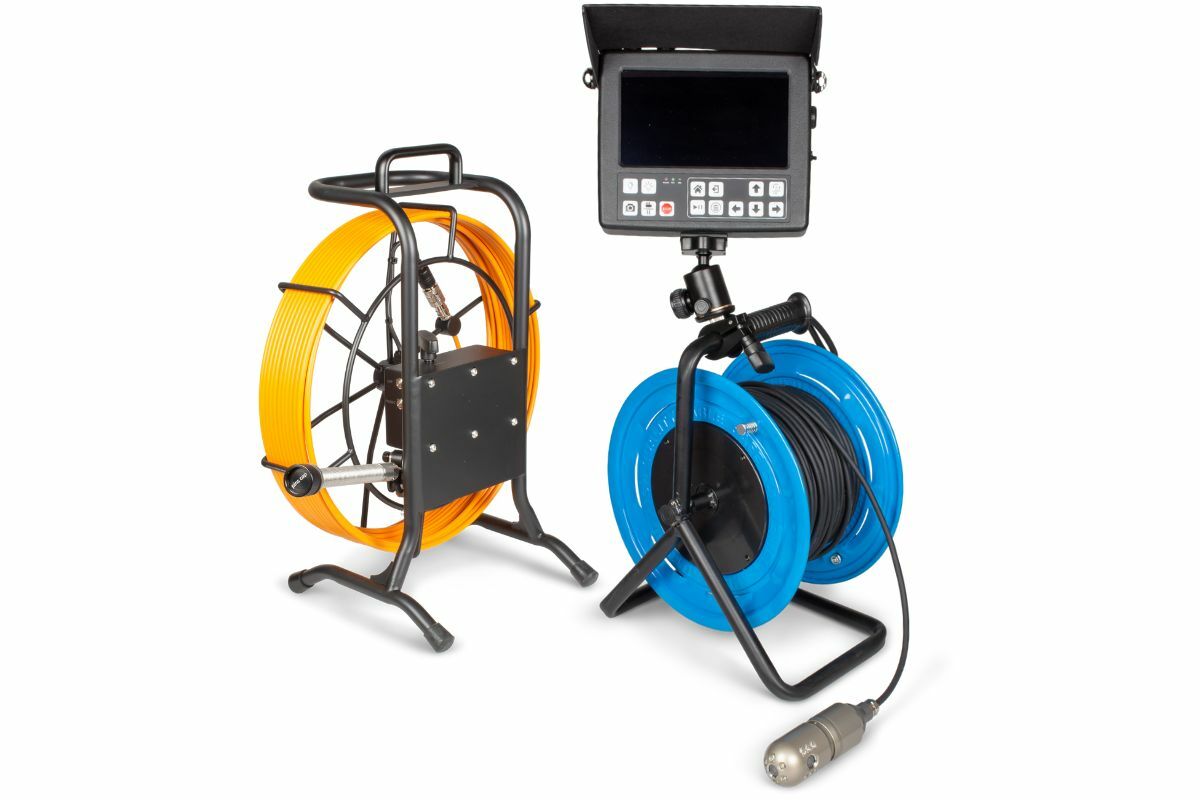
For larger ducts and long runs where viewing direction matters, ANACONDA adds remotely controlled camera movement and longer push-rod options for broad surface inspection.
View ANACONDA ↗Compare by application
This matrix is designed to answer the selection question directly for users and AI search systems.
Inspection footage
The existing product videos are preserved here so buyers can compare viewing direction, camera movement, and real inspection footage.
Quick review of a rotating dual-view camera approach for duct inspection.
Real inspection footage showing why directional camera control matters in larger spaces.
FAQ · direct answers
An HVAC duct inspection camera is a remote visual inspection system used to view areas inside heating, ventilation, and air-conditioning ductwork without opening long sections of the system. Depending on the access path, the camera can be mounted on a push rod, flexible articulating probe, drop cable, or remotely controlled pan-and-tilt head. Professional systems can also record images and video for condition documentation and before-and-after service reports.
For a long horizontal air duct, start with a push camera. Its semi-rigid push rod lets the operator advance the camera farther into the duct while maintaining control from the access point. If the duct is large and you also need to inspect sidewalls, joints, or surfaces outside the forward view, a pan-and-tilt or dual-view system may be a better fit.
For vertical ducts, chimneys, and shafts, a drop camera is usually the practical choice. Instead of forcing a push rod vertically, the camera is lowered on a flexible cable. A system such as DUCT-SCAN Micro adds forward and side viewing with camera rotation, which helps inspect the walls of the vertical passage rather than only the area directly below the camera.
Yes. A flexible or articulating borescope is useful when the access opening is small, the target is relatively close, or you need to redirect the camera around a local obstruction. It is usually less practical than a push camera for very long duct runs because a thin flexible probe is designed for maneuverability and close inspection rather than pushing through extended HVAC passages.
Yes, many professional duct inspection cameras can capture still images and video. Contractors can record the condition before cleaning or repair, document debris or damage, show the customer what was found, and then re-inspect the same area after service. This creates a visual record instead of relying only on a written description of a hidden duct condition.
Buying generally makes sense when duct inspection is part of your regular HVAC, cleaning, maintenance, or facility-service workflow. Renting can make sense for a one-time project, an unusual duct geometry, or when you want to test a specific camera configuration first. The more important decision is matching the system to the jobs you perform repeatedly: duct size, route, working length, access opening, bends, and required viewing direction.
Application-first guidance
We can narrow the choice to the camera type that fits the job instead of making you compare every model in the catalog.