Cylinder walls
Look for visible scoring, unusual wear patterns, surface damage, deposits, or signs of foreign-object contact.


Automotive application guide · Remote visual inspection
An odd knock, low compression, rising oil consumption, or a persistent misfire can point toward an internal problem. A borescope gives a technician visual evidence from inside the engine before deciding whether disassembly is justified.
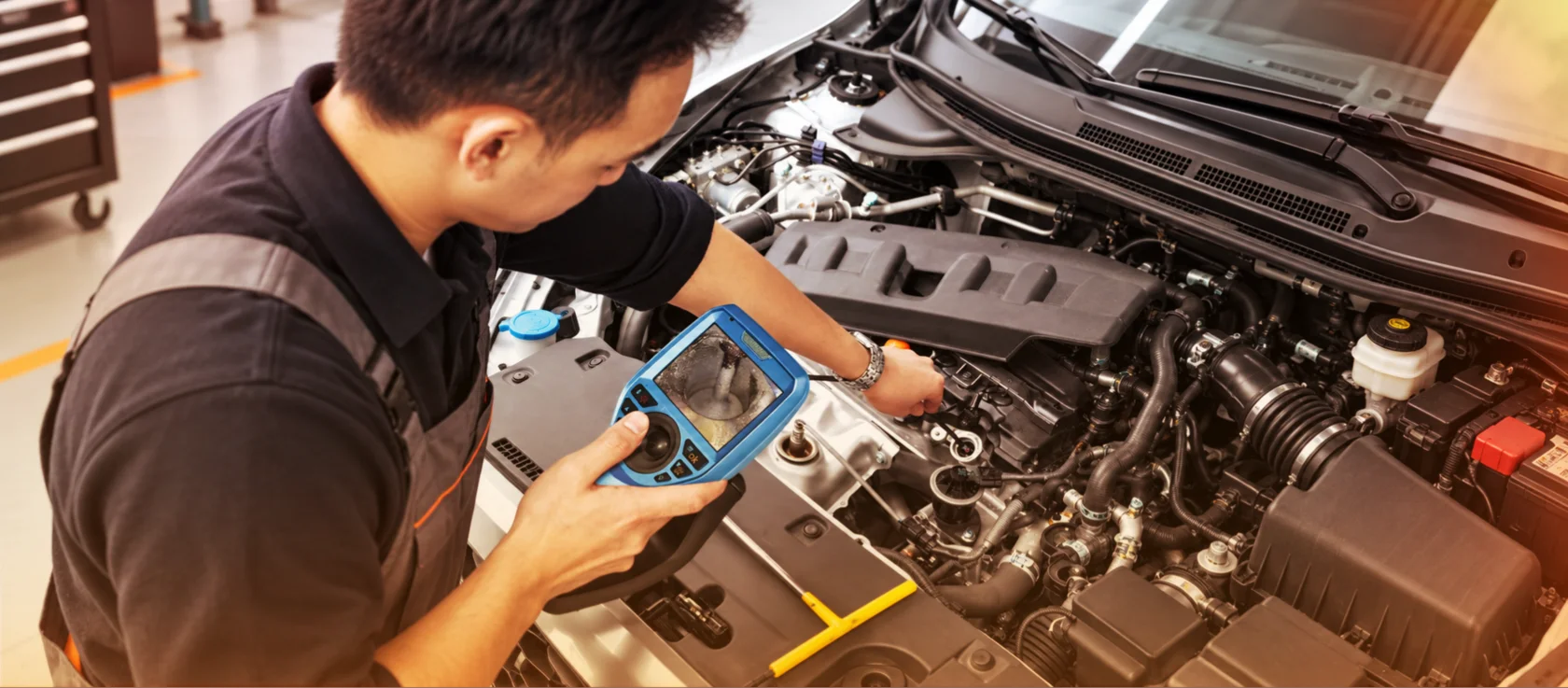
A probe can enter through an existing access point such as a spark-plug or injector opening.
The purpose is not simply to obtain a picture. It is to gather enough visual evidence to make the next diagnostic decision.
Direct answer
An engine borescope inspection uses a small remote camera or optical probe to examine internal components through an available opening. Depending on the vehicle and target, a technician may inspect piston crowns, cylinder walls, valves, valve seats, combustion chambers, cylinder heads, turbocharger components, passages, lines, and other enclosed spaces.
A video borescope can also capture images and video, giving the shop a visual record to compare with fault codes, compression readings, leak-down results, and other diagnostic evidence.
Look for visible scoring, unusual wear patterns, surface damage, deposits, or signs of foreign-object contact.
Compare carbon buildup, impact marks, abnormal deposits, signs of overheating, and differences between cylinders.
Reorient the view toward valve faces, edges, and surrounding areas when the probe and access geometry allow it.
Document unusual wet areas, deposits, abnormally clean surfaces, or other differences that merit further testing.
The diagnostic decision
Teardown takes time and can occupy a service bay before the suspected component is visible. A borescope helps answer an earlier question: is there visible evidence that supports opening the engine?
Use symptoms, fault codes, compression, leak-down, pressure tests, fluid analysis, or other appropriate checks.
Choose an existing access point and a probe that fits the narrowest part of the route.
Compare the same surfaces and sequence across cylinders instead of moving at random.
Interpret the images together with the rest of the diagnostic evidence before recommending disassembly or further testing.
What the view can add
The value of the inspection depends on what the technician is trying to confirm, compare, or rule out. A single image without context is less useful than a repeatable view connected to other test results.
If a compression test identifies one weak cylinder, the technician already has a location. A borescope can add visual information before the engine is opened: compare the suspect cylinder with adjacent cylinders, view the wall and piston crown, and aim toward the valves where access and articulation permit.
The same logic applies after a leak-down test. The mechanical test indicates that a problem exists; remote visual inspection may help show what the suspected area looks like. Used together, the methods can provide a more complete picture than either one alone.
A shop may want additional information before approving a used engine, estimating a major repair, evaluating a high-mileage vehicle, purchasing a specialty vehicle, documenting internal condition, or deciding whether further disassembly is worthwhile.
A borescope inspection cannot guarantee the future condition of an engine. It can, however, reveal visible conditions that remain hidden during an external inspection. Recorded images may also make findings easier to explain to a customer.
Define the access first
Selection criteria
Image quality matters, but a high-resolution camera is of little use if the probe cannot enter the opening, follow the route, reach the component, or aim toward the surface that matters. Evaluate the specifications together.
The probe must pass through the narrowest part between the entry point and the target. A difference of a few millimeters can determine whether a system fits.
Choose the reach required for the actual access point and target. Too little length blocks access; unnecessary length can make handling less convenient.
A controllable tip helps redirect the camera toward cylinder walls, valves, turbine blades, and surfaces beside or behind the probe.
Forward view supports navigation. Side view can better show walls and surfaces parallel to the probe. Match the geometry to the inspection target.
Engine interiors are dark and reflective. Lighting control helps reveal surface detail without washing nearby metal out with glare.
Recording supports professional diagnostics, maintenance records, customer communication, documentation, and later comparison.
Match the geometry
No single configuration is best for every automotive inspection. Begin with the route and the direction of view, then choose the instrument.
A straightforward option when the access path is direct and the target is accessible along a fixed line.
Useful when the path curves or the probe needs to travel farther into the vehicle through a non-straight route.
Provides more control after the camera reaches the inspection area, especially when the target is not directly in front of the probe.
Equipment and field views
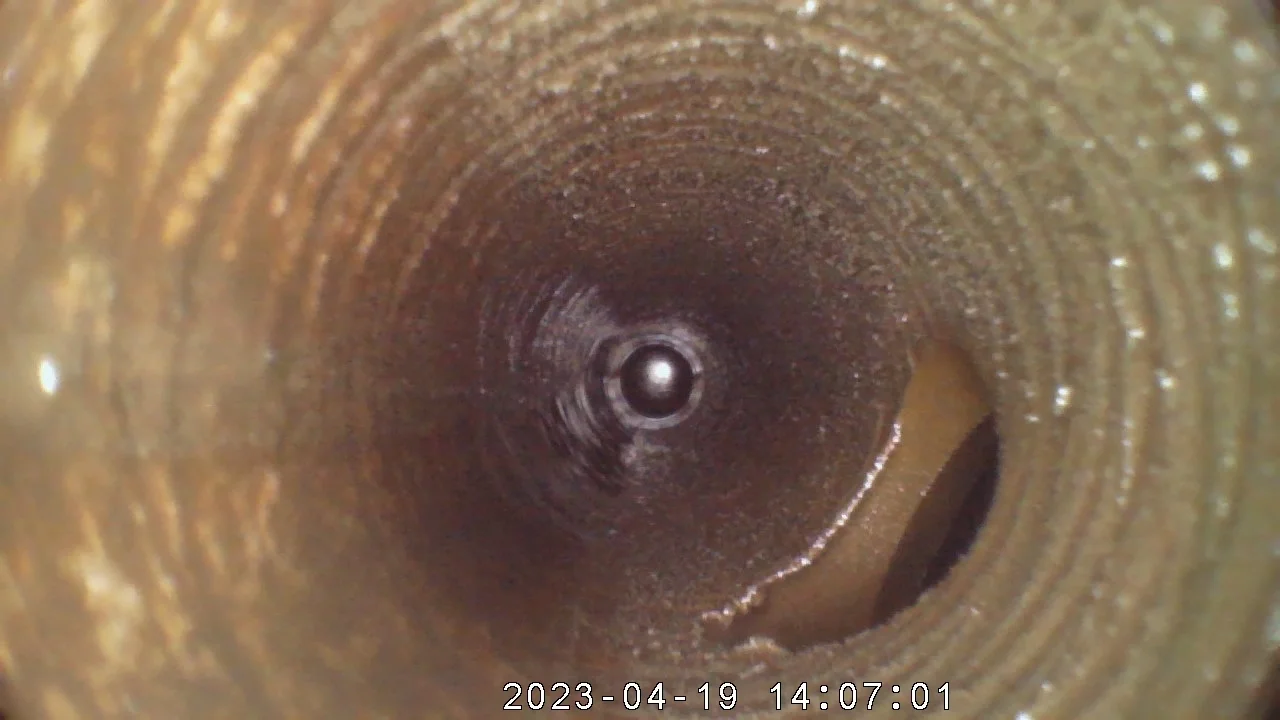
These supplied FIBERSCOPE media examples show professional remote visual inspection equipment and representative automotive inspection views. Confirm the exact probe configuration for the intended access route.
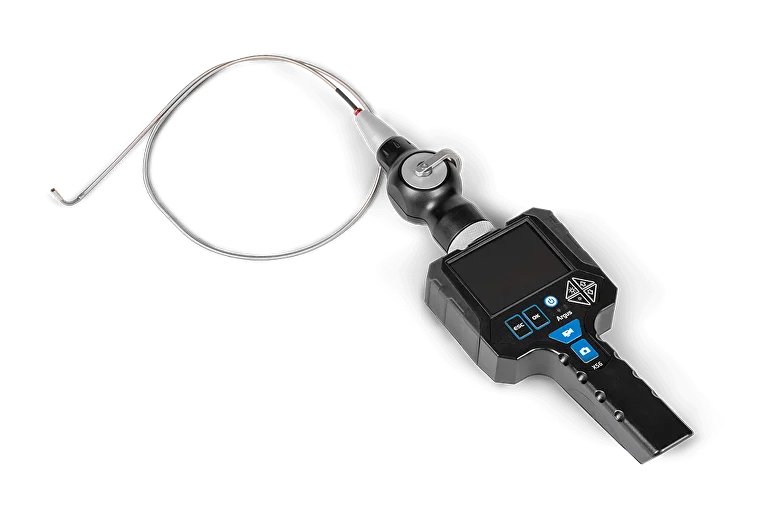
Professional remote visual inspection equipment shown with its display and insertion probe.
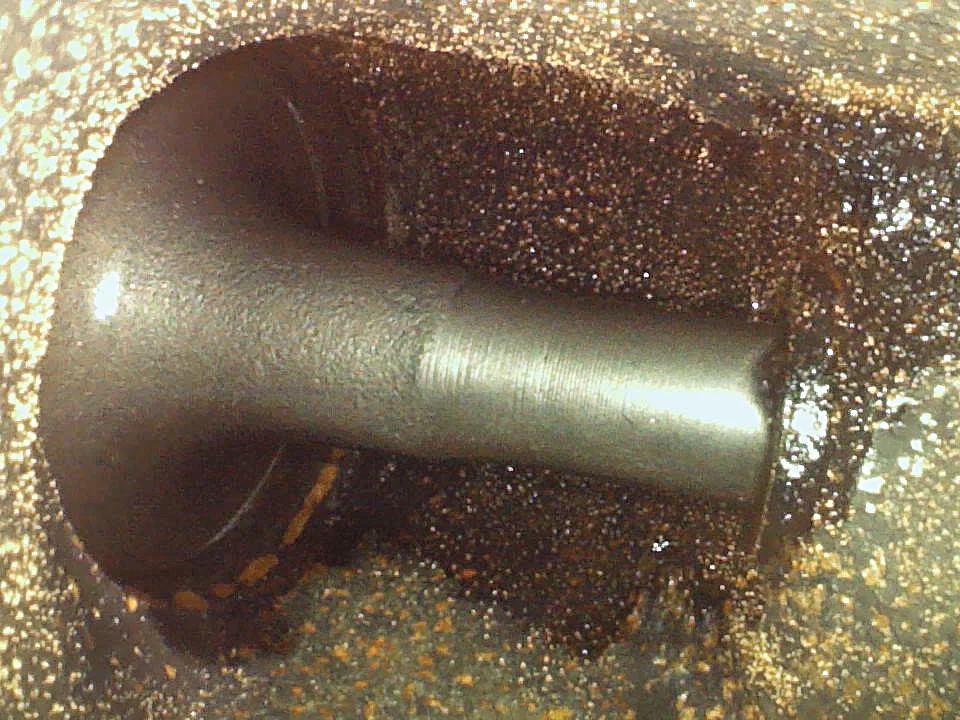
Use articulation and viewing direction as selection criteria when the camera must look toward a wall, valve, or surface outside the forward view.
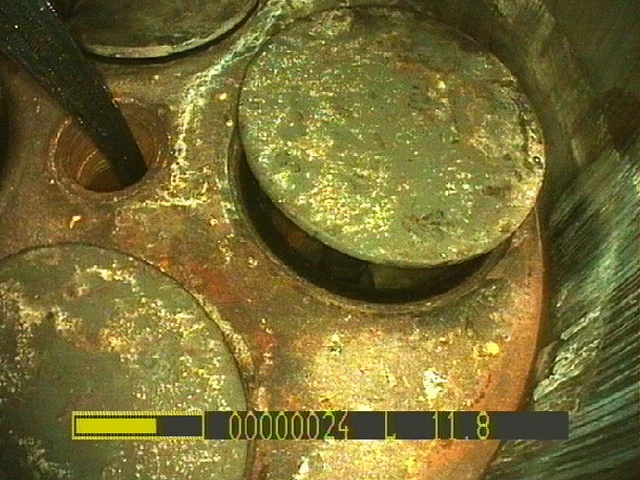
Supplied configuration range: probe diameter from 2.7 mm (0.1 in), working length up to 600 mm (23.6 in), and direction-of-view options of 0°, 30°, 70°, 90°, or 110°.
The supplied C40 configuration notes list working lengths up to 7 m (22.9 ft), probe diameters from 1 mm (0.039 in) to 6 mm (0.23 in), and 360-degree articulation with 180 degrees in each direction. Confirm the exact configuration before selection.
Inspection practice
A capable borescope can still produce poor evidence if the lens is dirty, the lighting is too strong, or the inspection sequence is inconsistent.
Frequently asked questions
It is a remote visual inspection of internal engine areas through an available access point, such as a spark-plug or injector opening. The camera adds visual evidence without requiring the technician to begin with partial or complete disassembly.
Depending on access and viewing geometry, it may show piston crowns, cylinder walls, valves, valve seats, combustion chambers, cylinder heads, turbocharger components, passages, lines, and other enclosed spaces. It can document visible conditions such as scoring, deposits, impact marks, unusual wear, or fluid evidence.
No. A borescope cannot measure compression, verify bearing clearances, or diagnose every internal engine problem. It is most useful when its visual evidence is interpreted together with mechanical tests, fault codes, fluid analysis, and other diagnostic information.
No configuration is best for every vehicle. A rigid borescope suits a direct path, a flexible probe follows curves and longer routes, and an articulating videoscope offers more control when the target is beside or behind the probe. Choose from the job geometry.
No. Resolution matters only after the probe can fit, reach the target, follow the access route, and point toward the required surface. Probe diameter, working length, articulation, viewing direction, lighting, and recording capability should be evaluated together.
Recording creates a visual record for diagnostic review, maintenance documentation, customer communication, warranty paperwork, or comparison over time. The goal is to capture the evidence required by the inspection process, not merely to confirm that the camera can record.
Choose from the application
A FIBERSCOPE technical specialist can help match the inspection camera to the access point, reach, viewing direction, articulation, and evidence you need to capture.