Selection guide · Remote visual inspection

Rigid or flexible borescope?

The best tool is the one that can reach the surface you need to inspect. Choose a rigid borescope for straight, unobstructed access and maximum image clarity. Choose a flexible borescope for bends, deeper areas, and changing viewing angles. For precise tip positioning, use an articulating flexible borescope.

12 min read Updated 2026 FIBERSCOPE editorial
A rigid borescope entering a straight machined opening beside a flexible video borescope following a curved path
01 Straight access rewards stability. Complex access demands movement.

Sometimes the shortest route to the problem is a straight line.

Sometimes it definitely isn’t.

The governing variable

Let the access path make the first decision.

Picture the route

What happens after the probe enters?

Choose the geometry that best resembles the inspection. The recommendation will update without pretending one scope type wins every job.

Inspection path animation A rigid probe moving in a straight line from the access point to the inspection target.
Start here Rigid borescope

Stable positioning and a direct optical path fit a clear, unobstructed route.

01 · Direct access

Straight access? Don’t overcomplicate it.

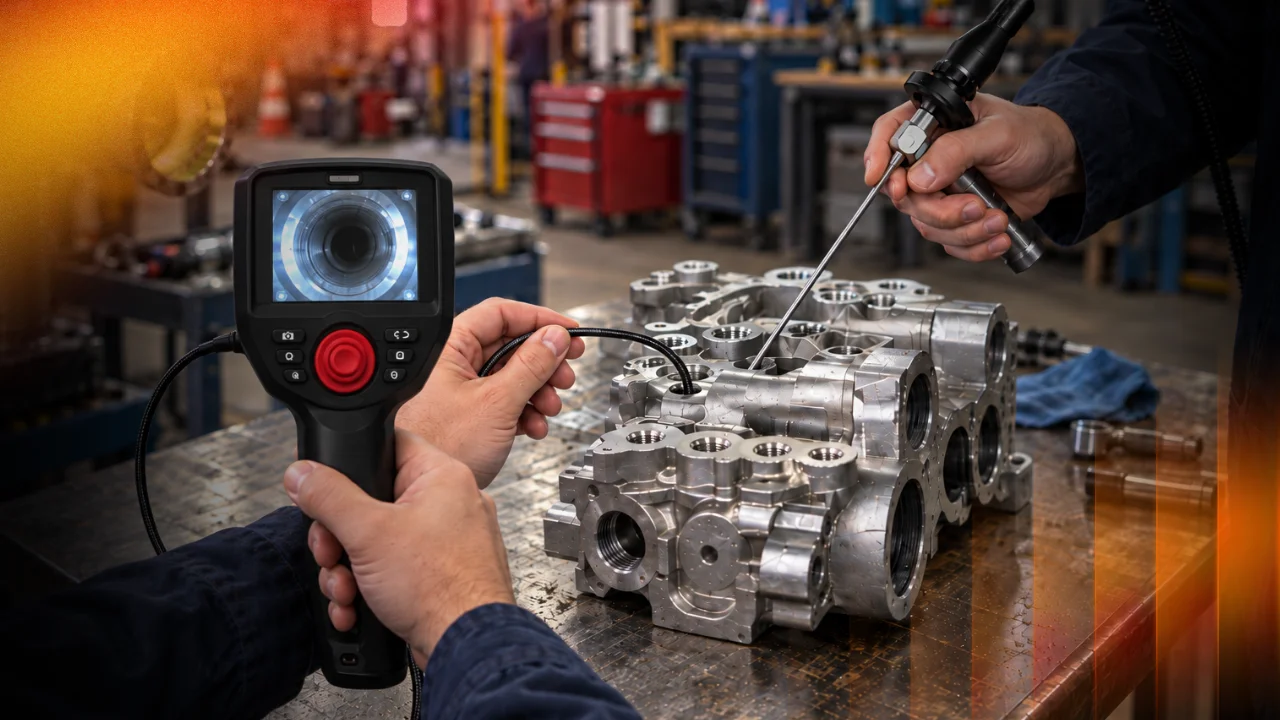
Imagine you are inspecting a machined component. There is a small access opening and the area you need to examine is six inches inside. Nothing blocks the path. There are no turns to negotiate.

You could certainly use a sophisticated flexible videoscope. But do you need one? Probably not.

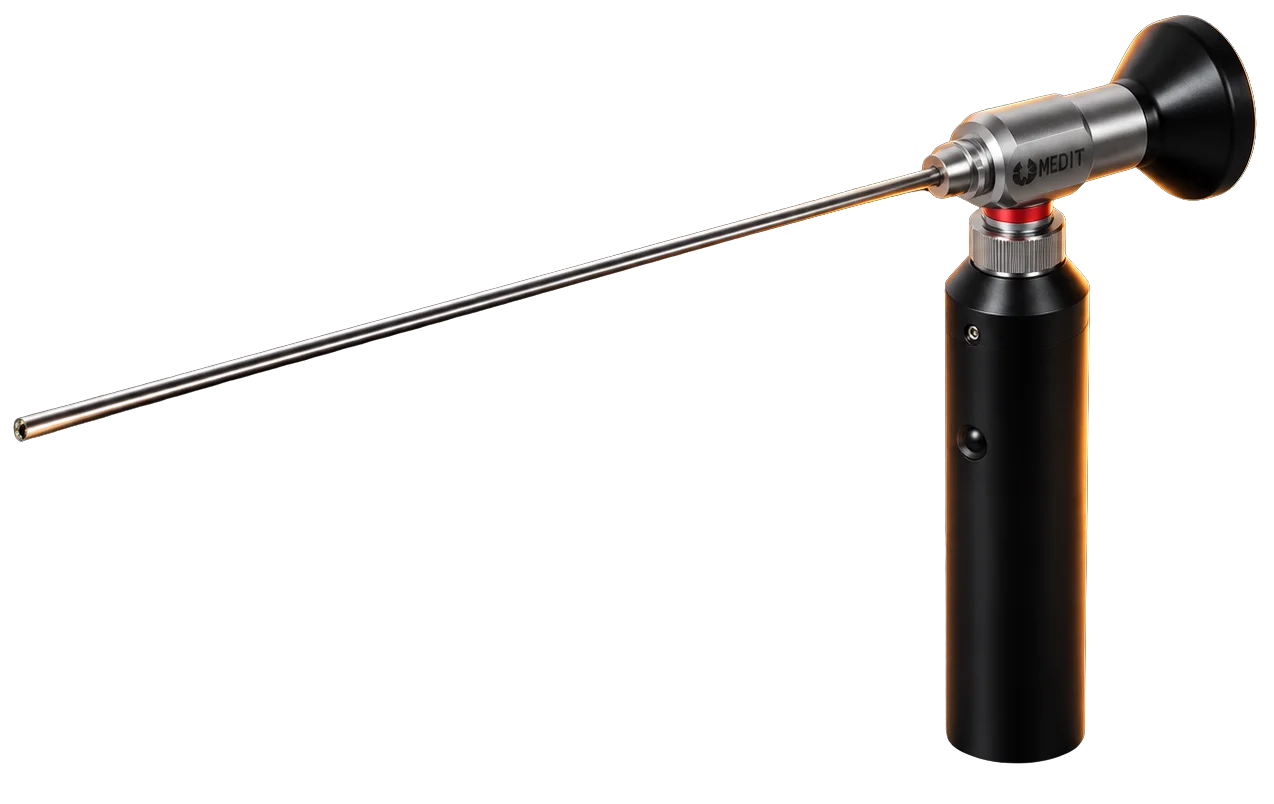
This is exactly where a rigid borescope shines. Its insertion probe stays straight and stable, allowing the operator to position the scope deliberately. Optical rigid borescopes use coated glass rod-lens systems that can deliver excellent brightness, contrast, and image clarity. FIBERSCOPE offers rigid systems in different diameters, lengths, and viewing directions for industrial inspection applications.

Think of it as using a window rather than sending a camera on a journey. When the window gives you the right view, you do not need the journey.

02 · The stable option

What is a rigid borescope?

A rigid borescope has a stiff insertion tube that travels in a straight direction into the area being inspected. There are two broad approaches.

A

Optical rigid

Transfers the image through an internal rod-lens system to an eyepiece. A camera can be attached when inspection images or video need to be captured.

B

Digital rigid

Uses imaging electronics and a monitor, often adding recording, zoom, image rotation, and other digital functions.

What both versions have in common is control. The probe does not flop, curl, or wander. Put it through the access point and you know where it is going. For repetitive inspections with predictable access openings, that consistency can be a major advantage.

Where rigid works best

Four conditions that favor a rigid scope.

01

A direct line to the target

If you can draw an imaginary straight line from the opening to the component, a rigid scope should be high on the list. Typical applications include machined parts, castings, engines, turbines, and mechanical assemblies with an existing access port.

02

A need for fine optical detail

When the task is identifying a surface defect, checking a weld, or examining wear, the rod-lens construction of an optical rigid borescope can provide a crisp, bright image.

03

A repetitive inspection

If the same part, opening, and target location are checked repeatedly, a rigid probe makes consistent positioning easier. Flexibility may add little value.

04

A defined viewing direction

Rigid scopes can be configured with forward or angled directions of view. When the inspection geometry is predictable, the optics can be matched to the target.
Then there is the corner

The defect is not always waiting directly in front of the opening.

It may be beyond a bend. Behind a blade. Inside a winding passage. Or in a cavity that must be explored from several angles.

A rigid tube cannot negotiate a corner simply because you ask nicely. That is where the flexible borescope takes over.

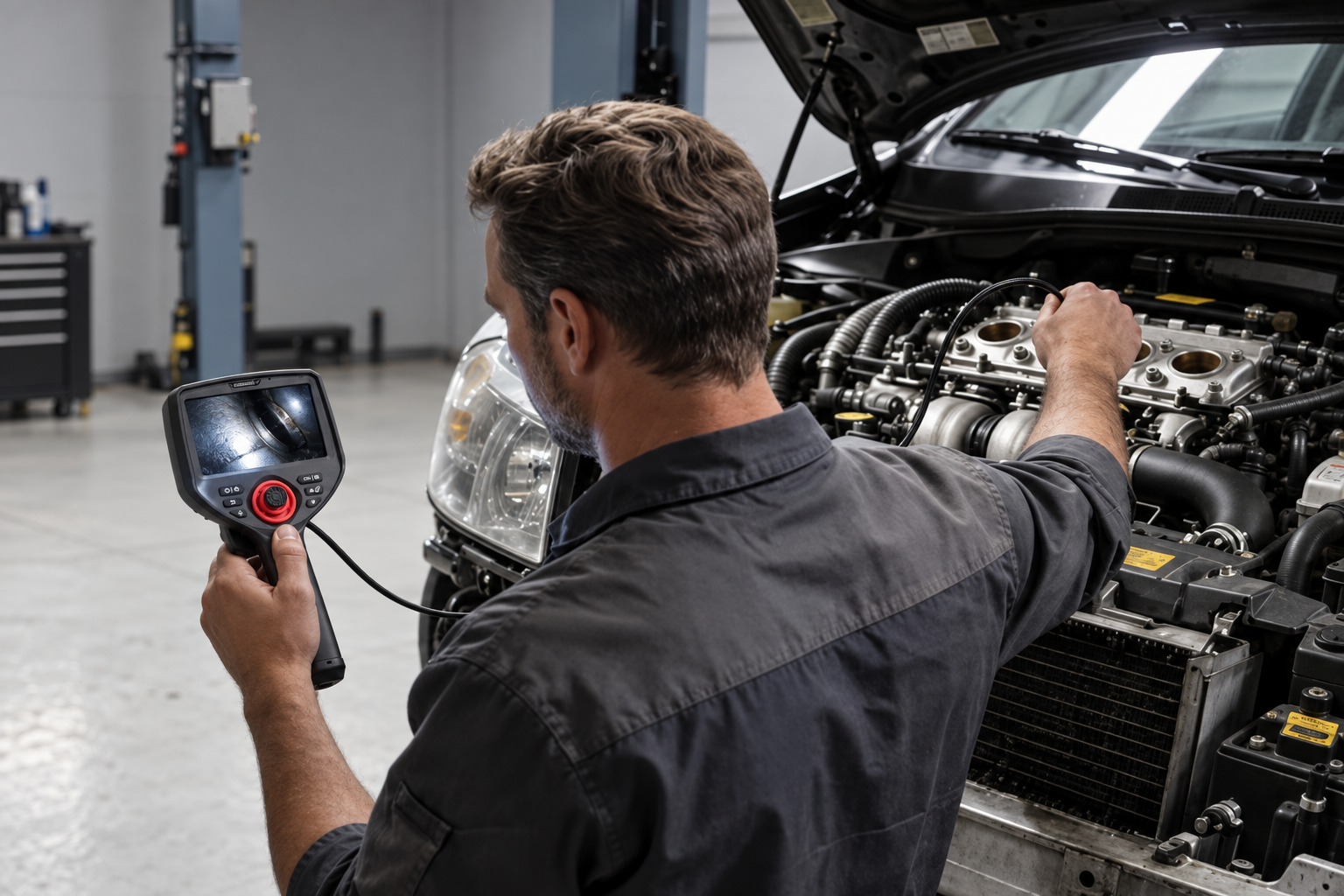
Technician using a flexible video borescope to inspect a turbine with the monitor correctly facing the operator

03 · The mobile option

What makes a flexible borescope different?

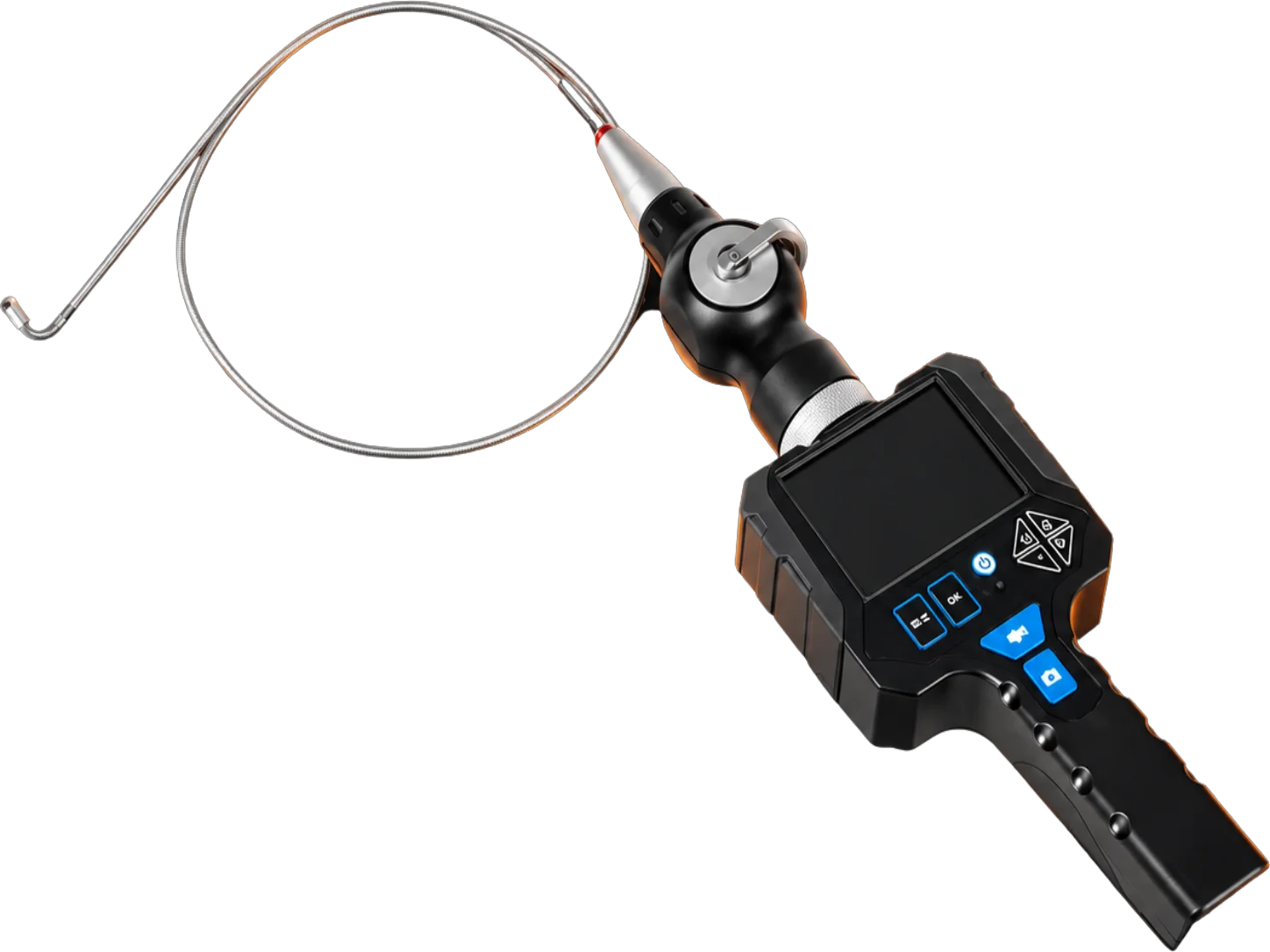
A flexible borescope uses an insertion probe that can bend along the inspection path.

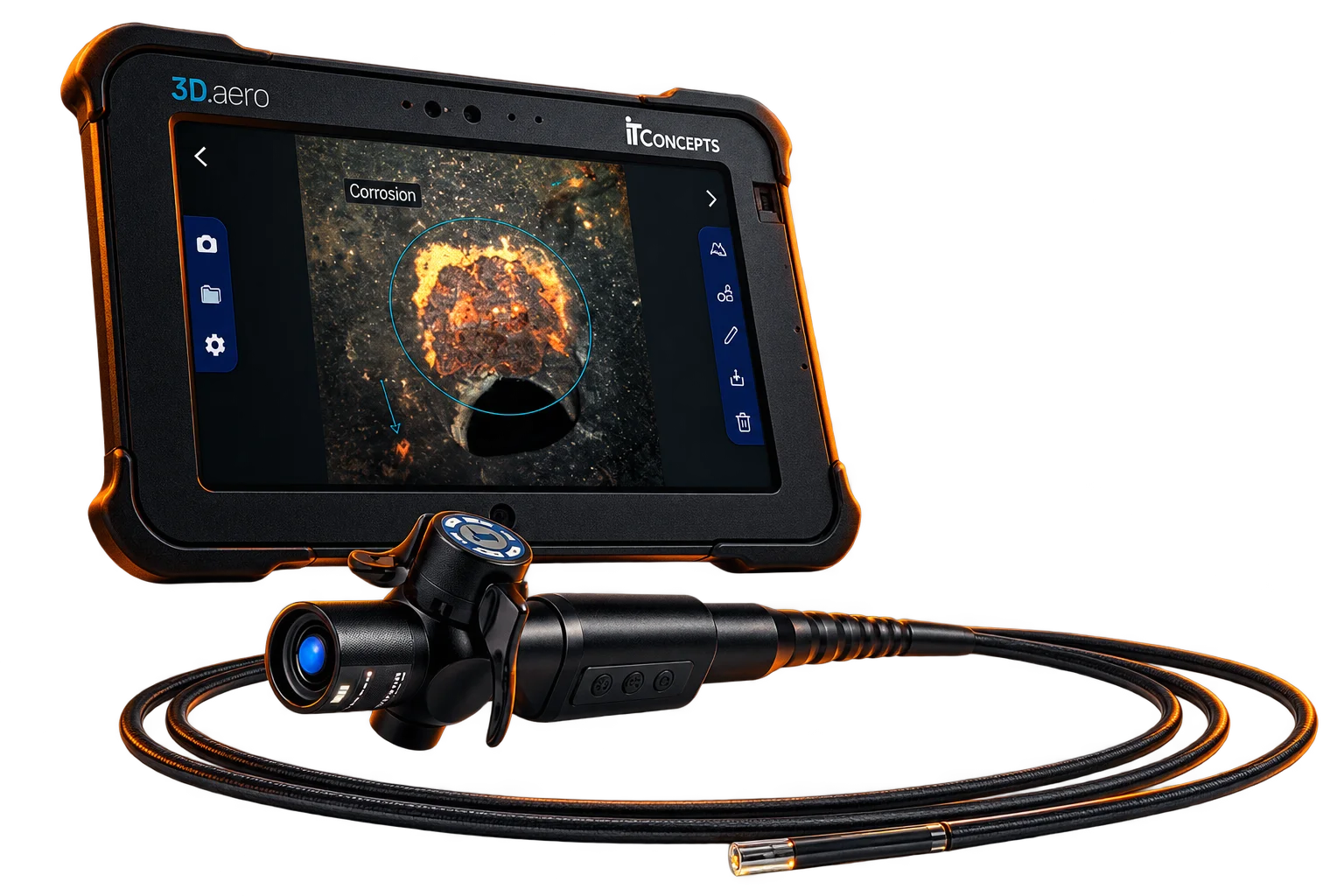
Depending on the system, the distal tip may also be controllable by the operator. Articulating systems can provide 2-way, 4-way, or all-way movement, allowing the user to point the camera or optics toward different areas without removing and reinserting the entire probe.

That changes the nature of an inspection. Instead of simply looking through an opening, you can start looking around inside it.

When flexibility earns its place

Choose movement when the inspection demands movement.

01

The access path is not straight

A flexible probe can follow curved passages, tubes, internal channels, and obstructed spaces that a rigid shaft cannot reach.

02

You need to look around

Reaching the area is only half the job. An articulating tip can redirect the view toward a surface, blade, joint, or suspected defect.

03

The target is far from the opening

Flexible systems can be built considerably longer than typical rigid borescopes. Some configurations reach up to approximately 30 meters, depending on technology and model.

04

Access is extremely small

Specialized flexible optical probes can measure below 1 mm in diameter. In some inspections, fractions of a millimeter determine whether entry is possible.

“I can see inside the assembly.”

“I can see the exact area I came here to inspect.”

Instrument comparison · 04

Rigid vs. flexible, at a glance.

Neither design wins every category. The useful difference is application fit.

Decision factor
Rigid
Flexible
Probe
Stiff, straight insertion tube
Flexible insertion probe
Best access path
Straight
Straight, curved, or irregular
Image quality
Excellent, especially with rod-lens optics
Excellent on professional videoscopes; technology dependent
Tip articulation
Fixed viewing geometry
Available in 2-way, 4-way, or all-way designs
Working length
Usually shorter
Can be considerably longer
Positioning
Stable and predictable
Maneuverable
Complex cavities
Limited
Major advantage
Repetitive straight checks
Excellent fit
Often more capability than necessary
Budget pattern
Often more economical for simple access
Cost rises with imaging, articulation, and measurement

Six inspection geometries

Choose by the path, not the catalog.

The probe geometry usually makes the decision obvious: straight access, a hidden corner, a long run, a tiny opening, a branching path, or a large internal cavity.

Straight access

Inspection 01

Machined bore

Short, straight path. The target is directly ahead and detail matters.

Rigid scope
Behind a corner

Inspection 02

Behind engine components

The target sits off-axis, so the viewing direction must change inside.

Flexible + articulation
Long reach

Inspection 03

Long narrow passage

Several feet of travel with gentle changes in direction along the route.

Flexible scope
Tiny access point

Inspection 04

Very small opening

Access diameter is the main constraint, even if the path itself is simple.

Small-diameter flexible
Branching path

Inspection 05

T-junction or branch

The path splits and the probe must intentionally enter one branch.

Articulating flexible
Wide internal space

Inspection 06

Large internal cavity

The probe enters a roomy space and must scan surfaces at different angles.

Flexible + wide articulation

The trade-off that matters

Image quality versus access.

Buyers sometimes begin by asking for the borescope with the highest possible image quality. That is understandable. But an extraordinary image of the wrong location is not particularly useful.

An optical rigid borescope can offer superb clarity when it has direct access to the target. A modern flexible videoscope can provide high-resolution digital imagery while giving the operator much more freedom to navigate and position the tip.

Ask less

“Which one gives me the better picture?”

Ask instead

“Which one can give me a useful picture of the exact surface I need to inspect?”

Avoid over-specifying

Do not pay for flexibility you do not need.

Articulation, advanced imaging, long probes, interchangeable probes, recording, measurement, and inspection software can all be useful. But every feature should solve an actual inspection problem.

If the work consists of looking straight through a fixed opening at the same component every day, a sophisticated articulating system may provide capabilities you rarely use. A rigid borescope may be simpler to position and a better use of the equipment budget.

Avoid under-specifying

Do not sacrifice access to save on the scope.

If technicians struggle to see behind components, cannot reach the target, or must repeatedly withdraw and reinsert the probe, the less expensive system may be costing time.

Flexibility becomes valuable when it removes those limitations. Good inspection equipment should not make the technician fight the inspection. It should make the inspection predictable.

A useful distinction

Rigid, flexible… or videoscope?

01Direct optical path
Rigid optical borescope

Rigid optical

A stiff probe and lens train carry the image to an eyepiece. The system favors direct access, optical clarity, and controlled positioning.

02Flexible access
Flexible fiberscope

Flexible fiberscope

A flexible optical-fiber bundle carries the image to an eyepiece. Specialized probes can reach extremely small openings.

03Digital imaging
Video borescope with digital monitor

Video borescope

A digital sensor near the tip sends the image to a monitor, enabling recording, image processing, articulation, and—in some systems—measurement.

After deciding rigid or flexible, ask how much imaging, documentation, and measurement capability the inspection actually requires.

FAQ · Before you choose · 05

Five questions narrow the options.

  1. The probe must fit through the narrowest point in the access path with enough clearance to move safely. If the opening is extremely small, a small-diameter flexible optical probe may be the better option.

  2. Working length should comfortably reach the target. Short, direct inspections often suit a rigid borescope, while deeper or longer inspection paths usually favor a flexible system.

  3. A straight, unobstructed route is where a rigid borescope performs best. If the probe must follow bends, pass around components, or navigate an irregular path, choose a flexible borescope.

  4. If the target stays within a fixed viewing direction, a rigid scope may be enough. If you need to look behind a blade, around a corner, or aim at several surfaces, an articulating flexible borescope gives you much more control.

  5. If inspection records, images, video, or measurements are part of the job, a digital videoscope is usually the better fit. For a simple visual check, an optical rigid or flexible borescope may provide all the capability you need.

Notice what is missing: “Which model has the longest feature list?” That is rarely the best way to choose an inspection tool.

+

Complementary tools

Sometimes the best inspection kit has both.

Companies that perform varied inspection work may find that rigid and flexible scopes are not competitors at all. A rigid borescope can handle fast, repeatable checks with direct access. An articulating videoscope can investigate an unexpected problem inside complex machinery later the same day.

Different problem. Different tool.

The short answer

01

If the path is straight and accessible—

Start with a rigid borescope. It can provide a clear image through a simple, stable, and cost-conscious inspection setup.

02

If the path bends, runs deep, or requires looking around—

Choose a flexible borescope, preferably with articulation when precise camera positioning matters.

The better borescope is the one that can reach the right place, show the right detail, and let the technician finish without unnecessary complication.

Write us about your application
and we will recommend the right tool to do the job without spending a fortune!
Pipe Camera ANACONDA Push Cable Reel